
NITN | @notintownlive | 18 Jan 2026, 06:17 am
 Vivekananda
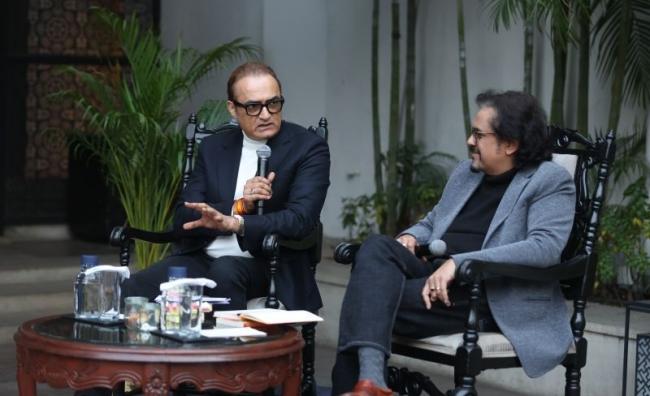
Anshul Chaturvedi in conversation with Bikram Ghosh in front of a packed audience at Taj Bengal. Photo: PKF
What does Vivekananda mean in an age obsessed with networking and validation? Journalist Anshul Chaturvedi decodes the monk’s radical emphasis on self-reliance, questioning faith, and living without fear—showing why his ideas continue to resonate with both believers and sceptics in reference to his book The Vivekananda Handbook for Everyday Living. IBNS correspondent Souvik Ghosh brings excerpts of Chaturvedi's conversation with classical tabla player Bikram Ghosh at An Author's Afternoon hosted by Prabha Khaitan Foundation at Taj Bengal in Kolkata on a winter afternoon...
On Vivekananda and Human Help
Q. Swami Vivekananda said “I do not care about human help” and urged people to handle troubles on their own. Does this dismiss the role of parents, gurus, or mentors?
A. Not at all. Vivekananda was not rejecting affection or guidance; he was warning against dependence. We often do not truly know what is good for us. With respect to parents, for instance, we read of honour killings even today—proof that parental hands can bless or harm.
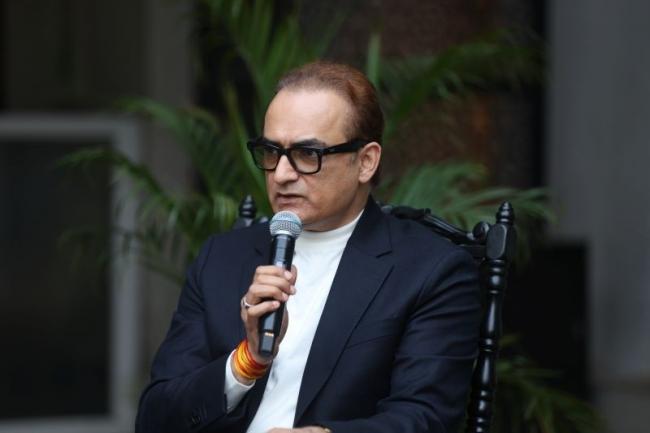 Senior journalist and author Anshul Chaturvedi.
The problem is our constant urge to acquire—relationships, influence, networks. The modern obsession with “networking” and self-image pushes us outward, while Vivekananda worked inward. He often quoted Ramakrishna: “When the flowers bloom, the bees come on their own.” The message is to strengthen oneself; the right people will arrive naturally. Human help should not be the ladder to our elevation.
Q. So the essence is self-strengthening?
A. Exactly. Samuel Johnson said friendship inevitably ends with one mourning the other—there is no “happily ever after.” Even in families, the ideal of parents caring for children and children caring for parents does not always play out. If it happens, it is beautiful; if not, it is not an exception.
Radhakrishnan, in his commentary on the Bhagavad Gita, writes that life’s goal is not to validate others but to understand oneself. Vivekananda echoes this inward journey.
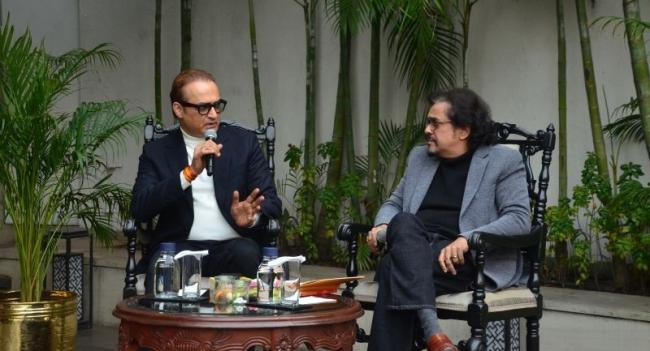 Anshul Chaturvedi in conversation with Bikram Ghosh.
Vivekananda for an Atheist
Q. Can an atheist connect with Vivekananda?
A. Absolutely. Vivekananda questioned everything. He asked Ramakrishna directly, “Have you seen God?”—a radical question for a monk. I have oscillated between belief and disbelief myself. Purely biological explanations of existence feel inadequate; yet organised religion also feels limiting.
Vivekananda allows scepticism. He lets you be religious without being servile, to question rituals while seeking logic and meaning. That openness makes him accessible even to atheists.
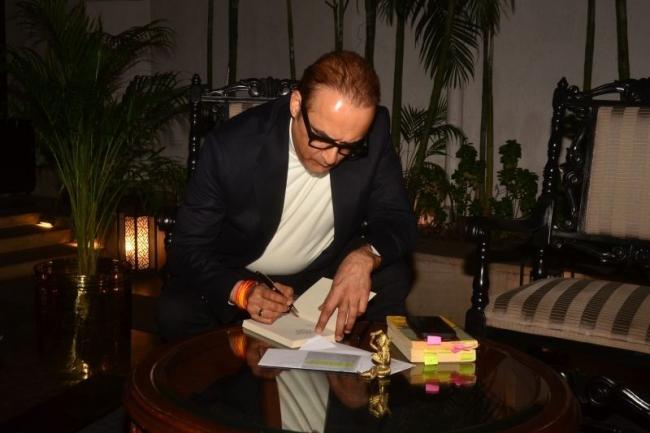 Anshul Chaturvedi signing copies of his book for the guests.
What Is Religion?
Q. Then how would you define religion?
A. Vivekananda said a perfectly happy world is like hot ice—it cannot exist. Life will always contain pain and joy, wealth and poverty. In my darker moods I call this world mrityulok—the realm of death—where impermanence is the only certainty.
For him, rituals are not decisive; what matters is how we live and evolve inwardly.
On Fear
Q. What did you learn from Vivekananda about fear?
A. Fear once paralysed me; I am still somewhat claustrophobic. But living in fear means fearing almost everything, including death, which is inevitable. Escapism is impossible.
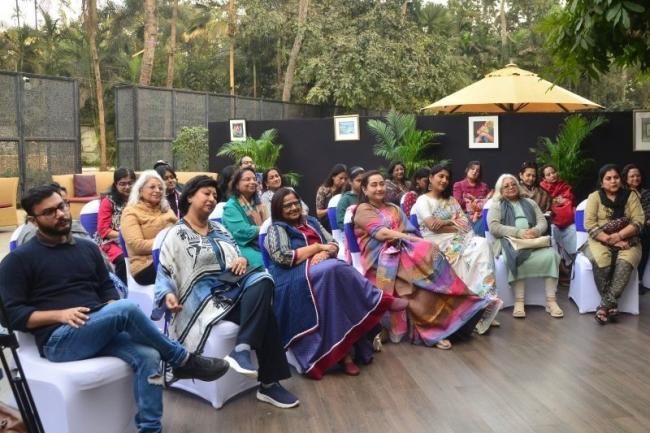 Audience listening to the conversation that continued for over an hour.
Vivekananda taught that letting go is the first step to freedom from fear. Attachment makes loss terrifying; detachment makes life bearable.
On Rebirth and Memory
Q. If the spirit is eternal, why don’t we remember past lives?
A. Perhaps God is a better manager than us. If we remembered everything, grudges would outnumber love and the world would be unlivable. A clean slate is mercy. (laughs)
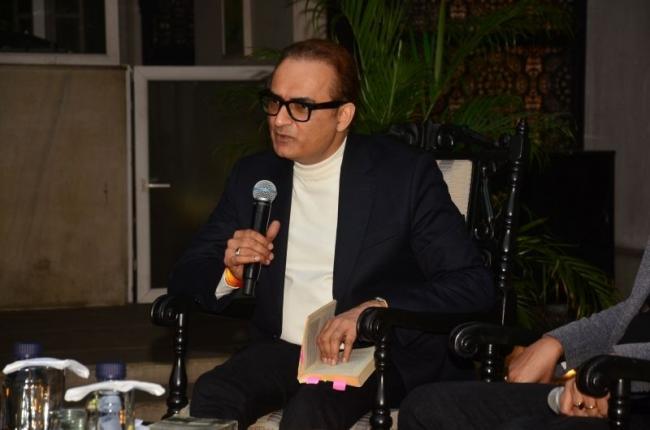 Anshul Chaturvedi interacting with the audience during the Q/A session.
Aurobindo said intense attraction or aversion without reason may be echoes of earlier lives—only the strongest emotions survive, the rest fade.
(Photos: PKF)
- Sundeep Bhutoria brings Bengal’s Mahalaya to the nation in Hindi – Mahishasur Mardini ki Gatha
- VeeCycle Works Signs MoU with AP Govt for Rs 150 Cr Recycling Project in Visakhapatnam
- Kolkata culturist Sundeep Bhutoria inaugurates India National Stand at Frankfurt Book Fair 2026
- Where governments stop, institutions begin: Culture Minister Shekhawat salutes Prabha Khaitan Foundation
- National Award-winning ‘Ramnami’ puts spotlight on community behind Chaltabagan’s ‘Nishan’ theme
- Thiagarajar Polytechnic College receives Education Excellence Award for the fifth time
- Sona College of Technology's 25th graduation day: 1,325 students receive BE, BTech, ME, MCA, MBA and PhD degrees
- ‘We are the worst storytellers’: Suhel Seth on India’s failure to market itself at 'Kitaab' book launch
- Sona College of Technology welcomes 2,400 freshers to UG, PG programmes
- ‘Children shouldn’t carry the burden’: Social activist Sundeep Bhutoria urges Centre to enforce 10% school bag rule

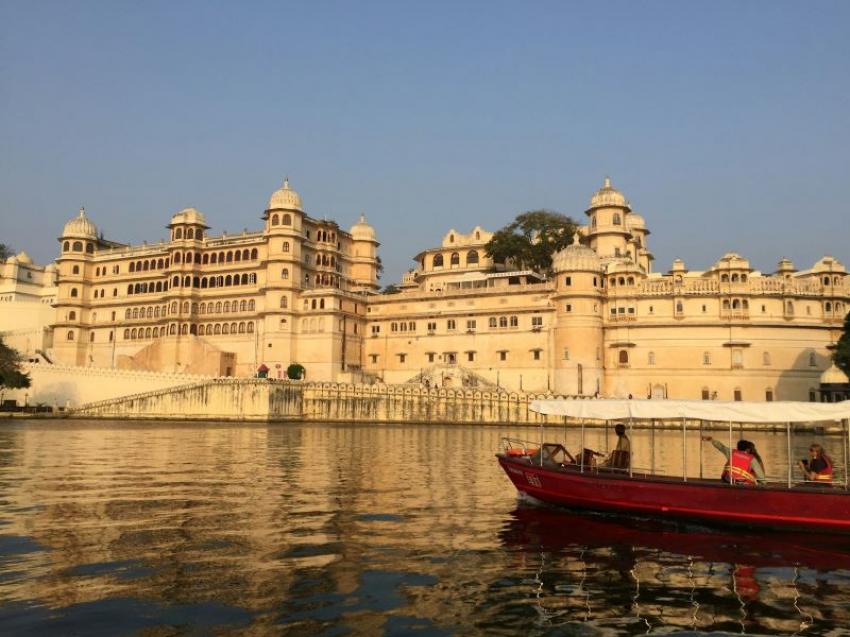
IndiGo will introduce daily non-stop flights to Udaipur from Noida International Airport and Navi Mumbai International Airport, starting October 25 and November 15, 2026 respectively.

Etihad Airways and Nigerian carrier Ibom Air have signed an interline agreement that will allow passengers travelling with Etihad to connect beyond Lagos and Accra to five cities in Nigeria on a single ticket.
Tata Group-owned Air India on Monday announced that guests flying during Navratri will be served specially curated festive meals onboard its flights and at its lounges in Delhi and Mumbai.