
NITN | @notintownlive | 05 Aug 2026, 05:00 am
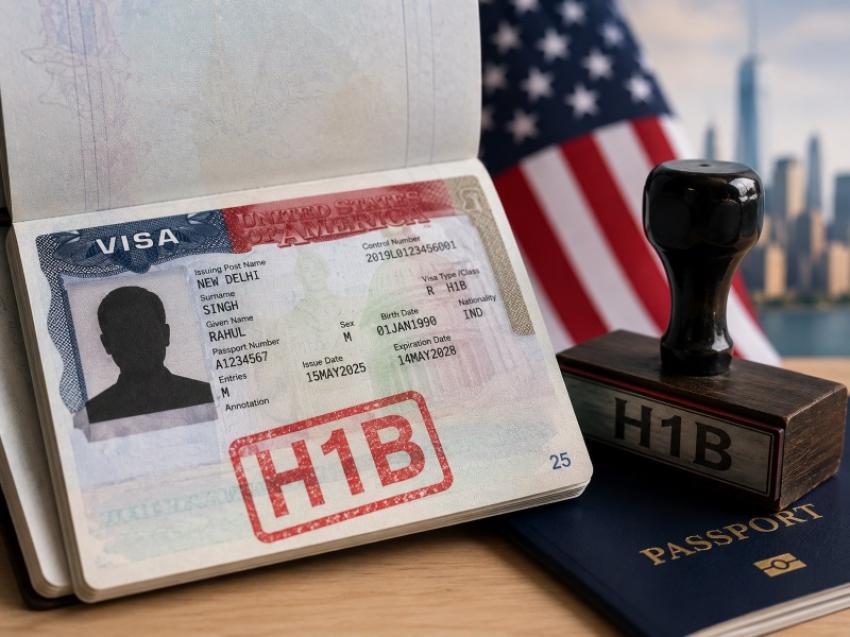
H-1B visa renewals might get costlier under new proposed changes. Photo: ChatGPT
The Donald Trump administration is moving to make the H-1B visa regime more expensive by extending an additional visa fee to renewal petitions, a change that could significantly increase costs for companies retaining foreign workers in the US.
At present, the additional fee applies only to new H-1B and L-1 petitions and certain change-of-employer filings. Under a proposed rule, employers would also have to pay the fee when extending the stay of existing H-1B and L-1 employees.
The move is expected to disproportionately affect Indian professionals, who accounted for more than three-fourths of all H-1B visa extension approvals in fiscal year 2025.
Rule heads towards finalisation
The proposal, formally issued as a Notice of Proposed Rulemaking (NPRM), was first published by the Department of Homeland Security (DHS) and Customs and Border Protection (CBP) in June 2024 and appeared in the US Federal Register.
It later featured in the Trump administration's 2026 Unified Regulatory Agenda, released in early July, as a pending final rule.
The regulation is expected to be finalised in the coming weeks after review by the Office of Management and Budget (OMB) and the Office of Information and Regulatory Affairs (OIRA).
The proposal comes weeks after a US federal appeals court declined to pause a lower court order striking down the administration's separate decision to impose a $100,000 fee on certain new H-1B visas.
What changes under the proposal?
The proposed amendment would expand the scope of the 9-11 Response and Biometric Entry-Exit Fee, making it applicable not only to new H-1B and L-1 petitions but also to extension petitions filed for existing employees.
Currently, eligible employers pay the additional fee only when filing an initial H-1B or L-1 petition or when an H-1B worker changes employers. If the rule is finalised, the same employers would also have to pay the fee each time they seek to renew an employee's visa.
The proposal targets employers with 50 or more employees in the US, where more than half of the workforce holds H-1B or L-1 status.
Such employers currently pay an additional $4,000 for qualifying H-1B petitions and $4,500 for qualifying L-1 petitions. Those charges would now extend to routine visa renewals.
Indian professionals likely to be most affected
The proposal is expected to have the biggest impact on Indian professionals because they account for the overwhelming majority of H-1B extension approvals.
According to US Citizenship and Immigration Services (USCIS) data, the agency approved 406,348 H-1B petitions in fiscal year 2025. Of these, 291,542, or nearly 72%, were for continuing employment.
Indian nationals accounted for 226,359 of those approvals, representing 77.6% of all H-1B extensions.
If implemented, employers with large Indian workforces—particularly in the technology sector—would face significantly higher costs to retain skilled employees already working in the US.
Tech giants among firms facing higher costs
Large technology companies and IT services firms are expected to bear the brunt of the proposal.
According to the National Foundation for American Policy (NFAP), Amazon recorded the highest number of approved H-1B petitions for continuing employment in fiscal year 2025 with 14,532 approvals. It was followed by Tata Consultancy Services (5,293), Microsoft (4,863), Meta (4,740), Apple (4,610) and Google (4,509).
NFAP notes that these figures represent approved petitions rather than individual employees, as a worker may receive multiple approvals in a single year because of transfers or amended filings.
Why DHS wants the change
The proposal revives a policy finalised by DHS in 2020 that was never implemented after being blocked in court.
According to DHS, the current interpretation allows many covered employers to avoid paying the additional fee when employees remain with the same company, even though Congress intended the charge to apply more broadly to extension-of-stay petitions.
The department says expanding the fee would better align with congressional intent while helping fund the US biometric entry-exit system, which relies on facial recognition and other biometric technologies to track travellers entering and leaving the country.
DHS estimates the proposal would generate an additional $157.3 million annually, while continuing to apply only to employers with at least 50 US employees where more than half of the workforce holds H-1B or L-1 visas.
If approved, the rule would add another financial burden on large employers that rely heavily on skilled foreign workers, particularly in the technology sector, where visa renewals account for the majority of H-1B approvals.
- The Traveller's Guide to Booking Train Tickets Online in India
- Planning a trip to India? Modi proposes free tourist visas for 11 ASEAN nations
- Big visa reform: India reduces visa categories from 13 to 9, simplifies entry rules
- World's best beaches 2026: Goa's Palolem is Asia's no. 1 and sixth globally
- Delhi introduces Yamuna river cruise. Here's all you need to know
- Planning a holiday? These 5 ChatGPT tricks could change the way you travel
- Thailand to showcase wellness tourism as Phuket hosts Global Wellness Summit 2026
- Cambodia tourism eyes major boost through new partnership with Etihad Airways
- Indian travellers using UPI payments at Dubai Duty Free can now get 10 percent discount
- Country Club rolls out lifetime membership for seniors at ₹49,999, launches Türkiye tourism initiative

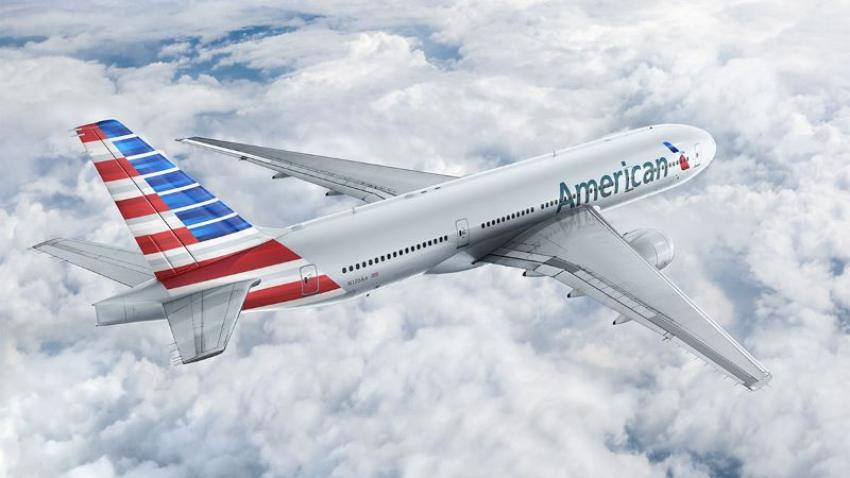
American Airlines and Israir Airlines have signed an agreement to establish a new commercial partnership aimed at expanding travel options between Israel and the United States. The partnership will be introduced in phases, with the first benefits for customers coming ahead of American Airlines’ planned return to Tel Aviv (TLV) in 2027.
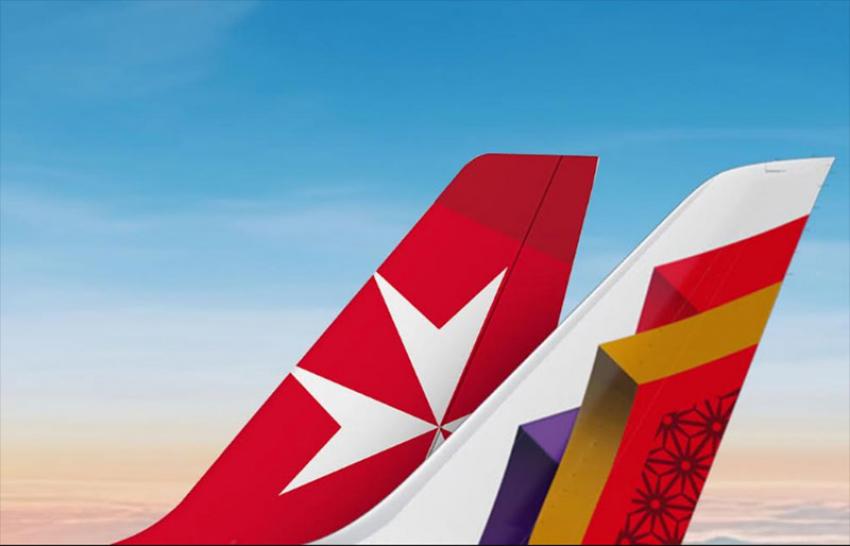
Tata Group-owned Air India on Friday announced the expansion of its partnership with KM Malta Airlines, the national airline of Malta, upgrading their existing interline arrangement to a codeshare agreement. The enhanced partnership is expected to make travel between India and Malta more seamless and convenient.
Etihad Guest, the loyalty programme of Etihad Airways, has launched its biggest-ever Buy Miles promotion, offering members bonus miles of up to 60 per cent on purchases made until November 22, 2026.