
Vincent Van Ross | @notintownlive | 23 Nov 2026, 09:06 am
 Camel Fair
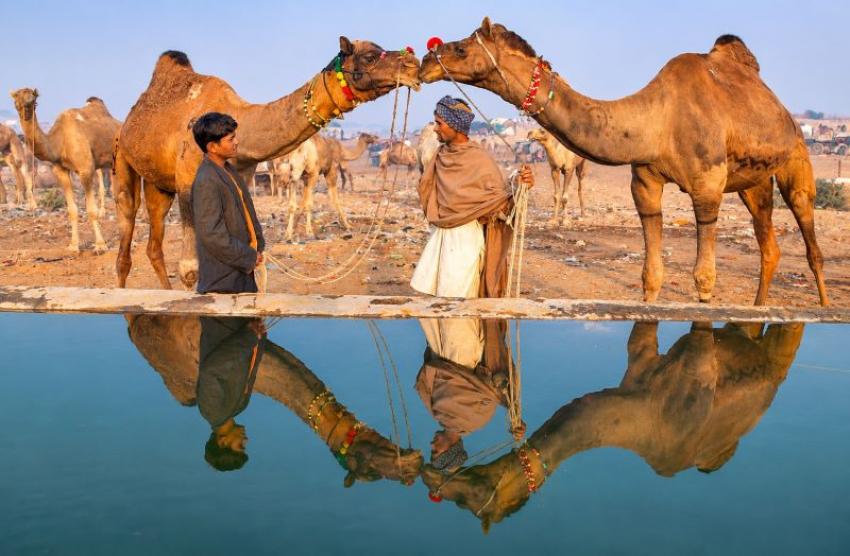
Dawn reflection: Adorned camels touch noses over a watering trough as trading begins. Photo: Vincent Van Ross
Weeks before Kartik Purnima each year, camels and their herders start making a beeline for Pushkar in Rajasthan, which hosts the largest camel fair in the world. This gathering takes place during the sacred Hindu lunar month of Kartik, corresponding to October–November in the Gregorian calendar. Spanning a full week, the 2026 Pushkar Fair runs from November 17 to November 24, culminating on the full moon night of Kartik Purnima.
During this week, hordes of tourists, journalists, and visual storytellers descend on Pushkar to capture the spectacle. Not to be left behind, lakhs of Hindu pilgrims travel here to take a holy dip in the sacred lake, seeking spiritual merit on this auspicious occasion.
Pushkar is primarily a temple town in Rajasthan’s Ajmer district. According to the Padma Purana, Lord Brahma once hurled a lotus flower armed with powerful mantras to destroy a demon who was harassing gods and sages. As the flower struck the earth, its petals scattered and landed at three nearby spots, creating three sacred lakes: Jyestha Pushkar (the main lake), Madhya Pushkar (the middle lake), and Kanishtha Pushkar (the smaller lake).
Lord Brahma chose Jyestha Pushkar to perform a grand five-day fire sacrifice (Mahayagya) to empower creation. To shield the ritual from demonic disturbances, he raised hills around the sacrificial altar—most notably Ratnagiri in the south, Nilgiri in the north, Sanchoora in the west, and Suryagiri in the east—and posted guardian deities to watch over them.
On the day of the Mahayagya, Brahma’s consort, Goddess Savitri, was delayed and missed the auspicious muhurt (time window) for the ritual. Because a householder cannot perform the sacrifice without his wife seated beside him, Brahma asked a local Gurjar maiden named Gayatri to take her place. When Goddess Savitri finally arrived and saw Gayatri seated beside him, she was furious. In her anger, she cursed Lord Brahma that he would never be worshipped anywhere else on earth—which is why Pushkar’s Brahma Temple is revered as his only major abode of worship.
Because Lord Brahma completed this five-day Mahayagya on Kartik Purnima, pilgrims have crossed the Thar Desert for centuries to gather under the full moon in his honor. Over time, desert traders and herders began bringing camels, horses, and cattle to trade alongside the pilgrimage, transforming a purely religious gathering into the famous Pushkar Camel Fair.
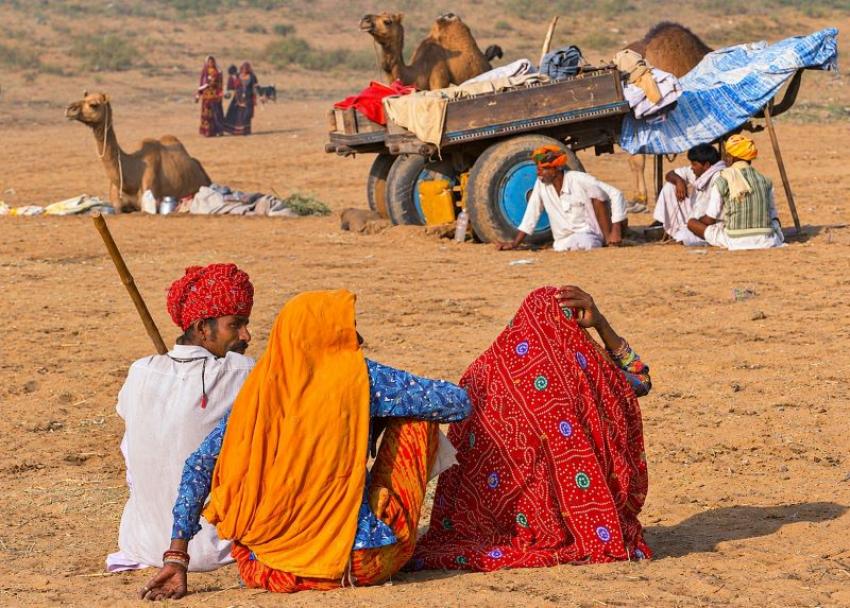 Rajasthani herding families gather among wooden carts and resting camels on the fairgrounds.
In 2008, I decided to join the bandwagon! That was eighteen years ago, yet the memory remains so vivid that it pulls me down memory lane time and again.
Back then, the event was marketed heavily as the "Pushkar Camel Fair." That tagline stuck in my head, and I walked into the fairgrounds with tunnel vision—much like a horse wearing blinkers. My lens was fixed entirely on camels. I passed countless vibrant scenes along the way, yet scarcely any made it into my camera because of my single-minded obsession.
Only later did I discover that the fair was packed with other livestock, including horses, cows, and bulls, tucked away from the main grounds behind an inconspicuous entrance. Anyone who wasn't curious or observant enough could have easily walked right past it. Still, with that tagline echoing in my mind, it was all camels for me—and I spent three or four shutter-happy days photographing the animals and the families who raised them.
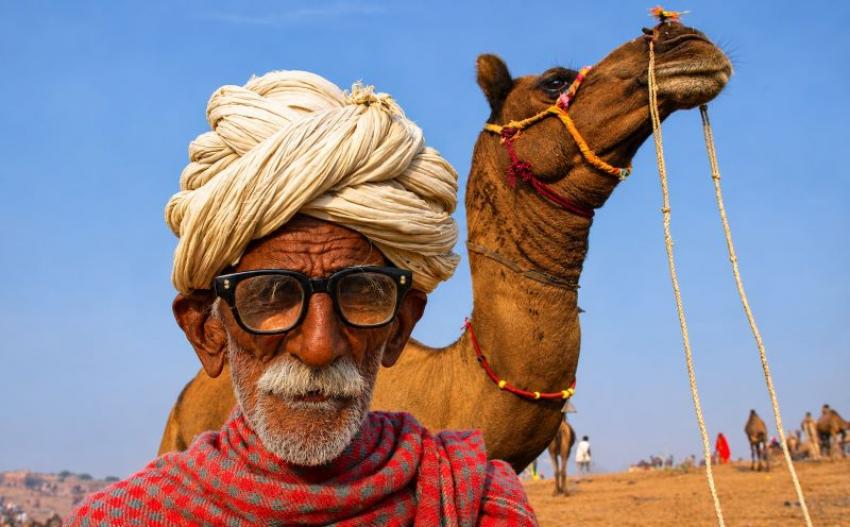 A veteran camel breeder with his prized dromedary on the Pushkar sands.
One encounter, however, became the highlight of my trip. I squatted down beside a herder named Bharat Ram Devasi and was all ears as he recounted his journey from his home in Kanuja village (in Raipur tehsil of Pali district) to Pushkar. He had set out on October 29, 2008, with 30 camels, covering 120 kilometers over six days. Stopping for the night at Atpada, Patwa, Jaitaran, and Raaz in Pali, and then Pisangan in Ajmer, he arrived in Pushkar on November 3—three days before the fair officially began, ahead of its Kartik Purnima finale on November 13. Bharat had been making this trek for 15 years, following in the footsteps of his ancestors for generations.
I spent nearly four hours talking with Bharat, and in that afternoon, I learned more about camels than I ever imagined. I hadn't realized how versatile they are: beyond serving as pack animals, pulling carts, and carrying tourists on rides and safaris, they plough fields, draw water from deep wells, and even assist India's Border Security Force in patrolling the desert frontier with Pakistan.
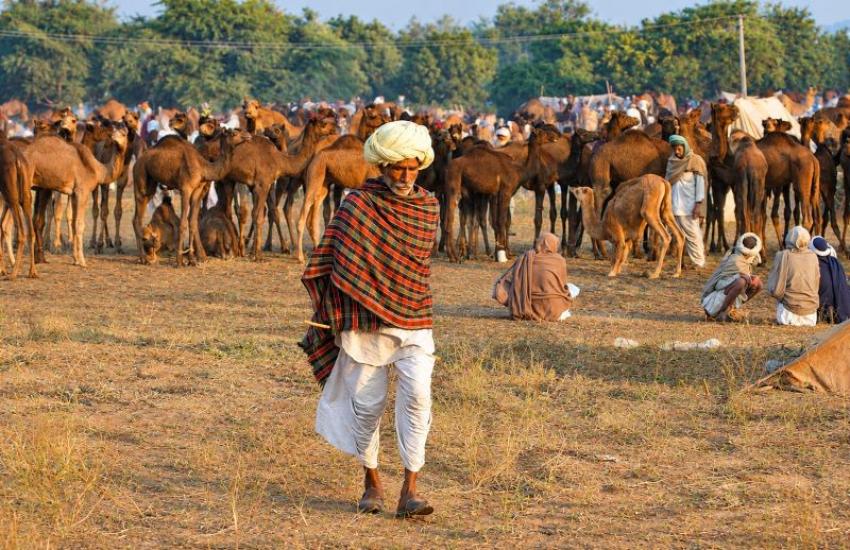 Thousands of dromedaries in shades of buff and brown fill the livestock grounds.
As Bharat shared stories from his life on the road, I gained a fascinating crash course in camel lore:
• Lifespan & Breeding: A camel can live up to 35 years. Females mature at three years old and males at four, with calves born after a one-year gestation period. According to Bharat, a single male can sire up to a thousand calves in his lifetime, though he never mates with females of his own offspring’s generation. Courting happens strictly during the four winter months, never in summer—and right around Holi, before the heat sets in, herders trim the camels' coats to keep them cool.
• Growing Up: Calves get their milk teeth at one month and a full set of 22 teeth by six months. After two or three months on mother's milk alone, they gradually shift to dry grass, thorny shrubs, and desert foliage, though they may continue nursing for up to two years unless weaned.
• Colors & Value: Camels typically come in three shades—black, buff, and brown. In 2008, a camel fetched anywhere from ₹3,000 to ₹70,000; today, prices range between ₹30,000 and ₹3,00,000.
• Desert Endurance: Truly the "Ships of the Desert," camels are unmatched on long arid journeys where horses can only manage shorter distances. They can go three to four days without water in scorching summers and up to a week in winter.
• Loyalty & Instinct: Bharat spoke of his camels like family members. Fiercely protective of their masters, they can deliver a powerful kick or a serious bite to defend them. Even more remarkably, they possess an almost built-in compass—capable of finding their way back to their home village on a pitch-black, moonless night if separated from their herd.
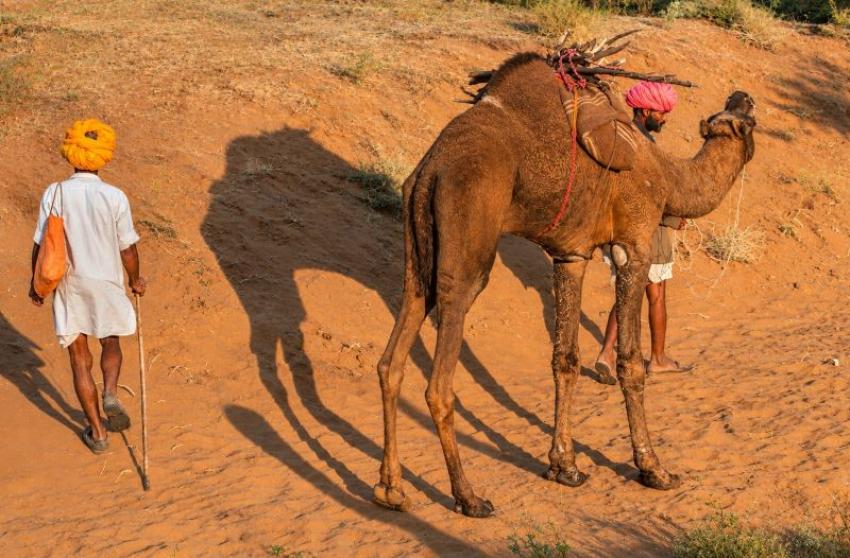 Long desert shadows trail herders leading a camel laden with firewood.
Before arriving at the fair, herders lavishly adorn their animals. Some camels wear strands of colorful beads around their necks, bright artificial flowers on their snouts, or ornaments woven with colorful strings and mirror work. Others sport intricate designer haircuts or painted patterns across their coats.
Bharat belongs to the Devasi-Rewari community, traditional breeders of camels, goats, and sheep. While his family stays rooted in Kanuja tending to the young, elderly, and pregnant camels, Bharat leads a nomadic life—herding his animals across state lines into Uttar Pradesh, Madhya Pradesh, Maharashtra, and Chhattisgarh. Back in 2008, he paid an octroi tax of ₹40 per camel every time he crossed a state border, a fee that has surely multiplied since.
At the time, camel milk sold for ₹20 to ₹25 a kilo, though prices could jump ten- to twenty-fold depending on supply and demand.
A few days after Kartik Purnima, Bharat called to share the good news: he had successfully sold most of his herd.
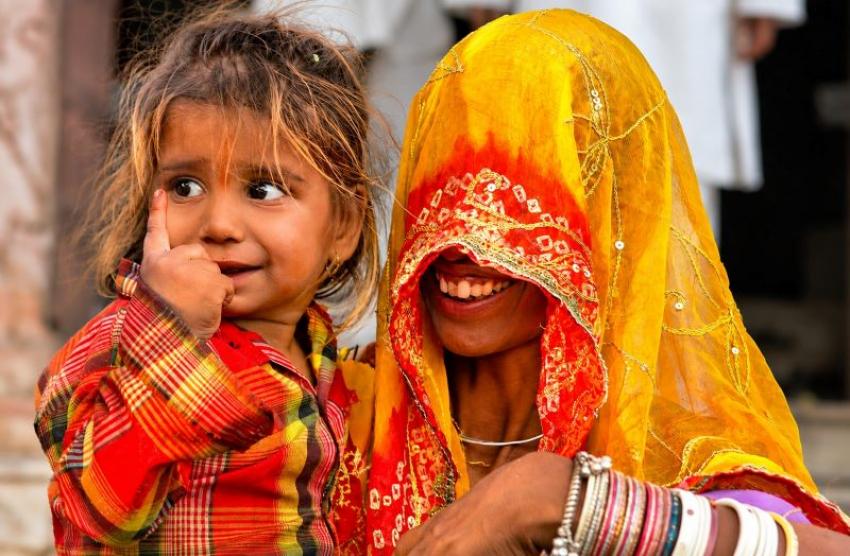 Vibrant bandhani fabrics and candid smiles bring color to the fair beyond the pens.
Looking back over the years, I realize how much of Pushkar I missed during that camel-obsessed trip in 2008. Pushkar Lake is ringed by 52 ghats and surrounded by roughly 500 temples. Visitors today can also catch vibrant cultural spectacles like the Moustache and Pagri (turban-tying) competitions, watch camel dances, or ride the ropeway—which opened in 2016—up to the Goddess Savitri Temple for a sweeping bird's-eye view of the town.
At least I didn't miss out on the food. True to my love for local flavors, I sampled fresh camel milk alongside steaming malpua, crispy mirchi-ka-pakora, and even falafel—a nod to Pushkar's famous international backpacker cafes.
Some journeys leave a lasting imprint on the mind, and the Pushkar Camel Fair is certainly one of them. Whenever I make my next trip back, I plan to finally explore everything I missed. Until then, I will happily continue to relish those sun-drenched memories.
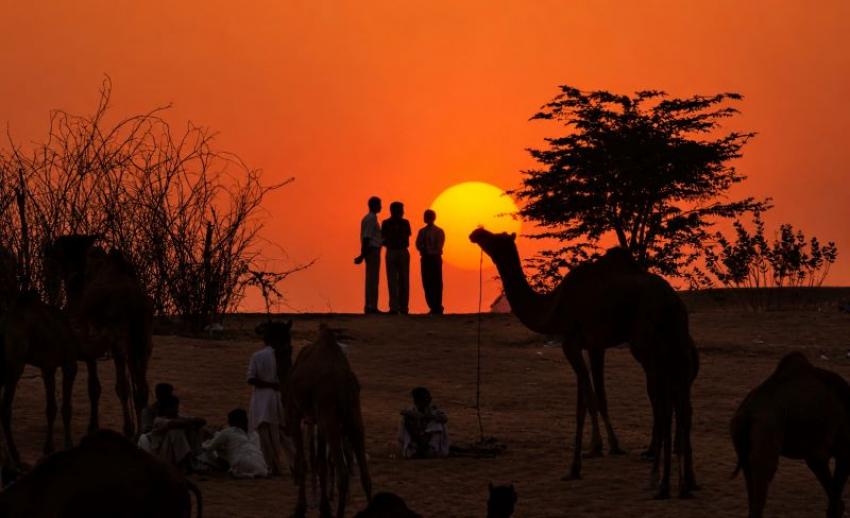 Dusk falls over the Aravalli horizon, silhouetting herders and camels against an amber sky.
Text & Photos: Vincent Van Ross
- Reminiscences of the Pushkar Camel Fair
- Beyond the usual: Three unique destinations to explore on BBC Travel’s 2027 list
- IndiGo unveils new in-flight pre-book menu with Regional Favourites and Global Flavours
- Theobroma finally arrives in Kolkata! Sauraseni Maitra inaugurates first store
- America’s 250th anniversary reaches Kolkata with U.S. Navy band’s pop and rock show
- Sweet Memory: How a Kolkata Durga Puja Is Retelling Bengal’s Love Affair With Mishti
- Kosha Mangsho Roll to Gurer Sandesh Flan: Starbucks Kolkata unveils special Pujo menu blending Bengali flavours with global favourites
- Ganesh Chaturthi in the Skies: What Air India Has in Store for Flyers in its Lounges
- US Envoy Sergio Gor gets a taste of Darjeeling, enjoys Toy Train ride, tea, and local culture
- 1000 Islands: Back to the Waters That Never Left Me
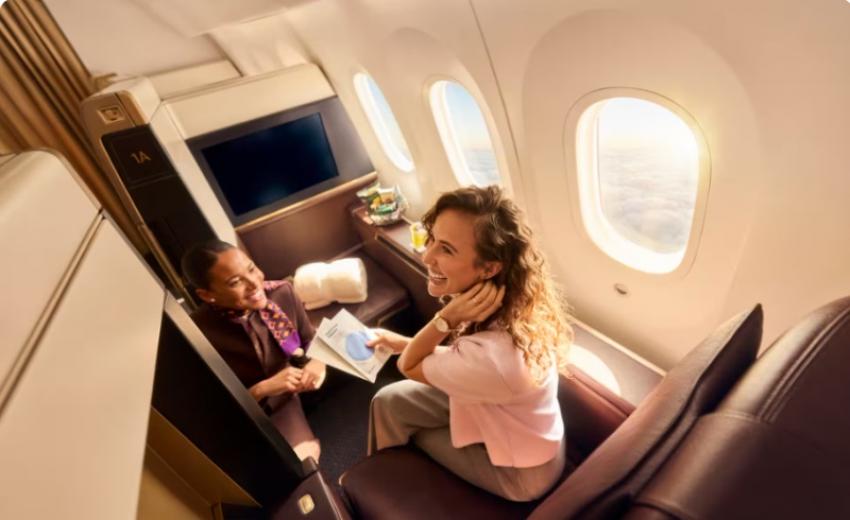
Etihad Guest, the loyalty programme of Etihad Airways, has launched its biggest-ever Buy Miles promotion, offering members bonus miles of up to 60 per cent on purchases made until November 22, 2026.

Lufthansa is introducing a new Premium Business Seat on some of its short- and medium-haul flights, offering passengers more personal space and additional comfort. The seats can be booked now for flights from March 1, 2027, on routes between Frankfurt and Athens, Nice and Cairo.
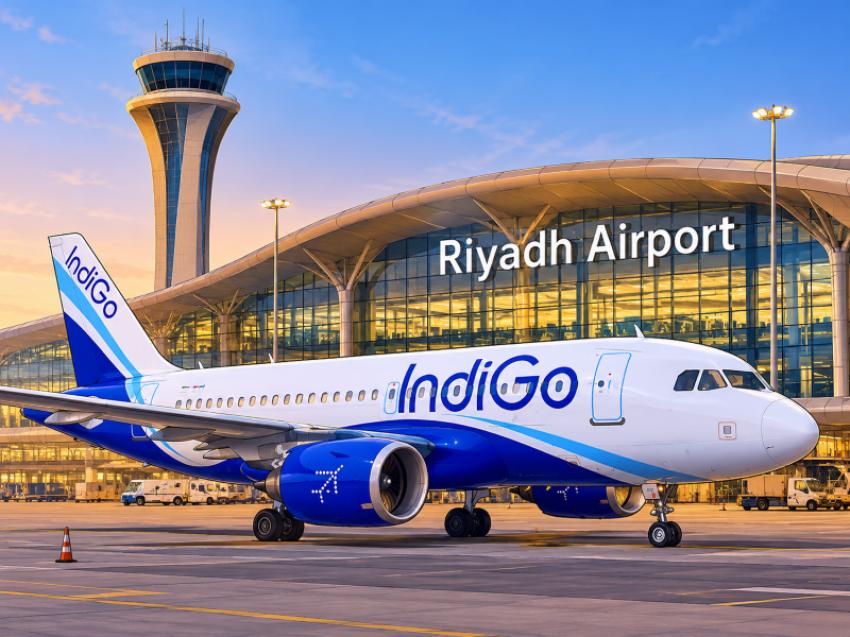
IndiGo has cancelled all its flights to and from four major Saudi Arabian cities until November 30, 2026, citing the prevailing security situation in the Kingdom.