
NITN | @notintownlive | 05 Mar 2019, 06:47 am
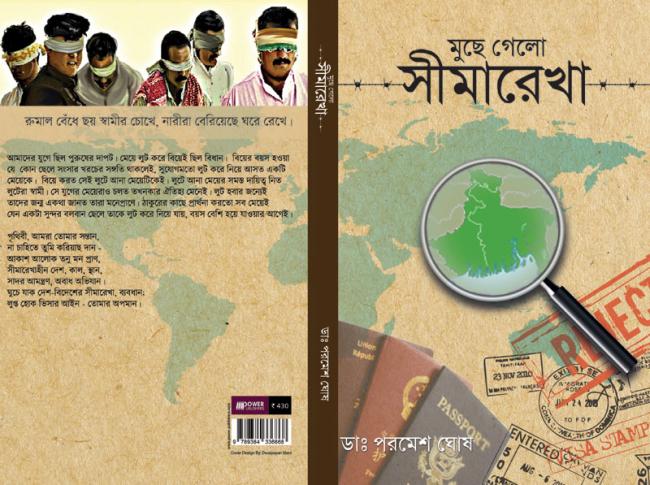
The world is a single place yet it is divided into so many parts with man-made borders and there is so much diversity all around.
Many restrictions and hindrances are present in this world and we actually do not know the ways to overcome it.
In his Bengali book Muchhe Gelo Seemarekha, Dr Parames Ghosh has pointed out the restrictions of borders between countries and he wants to omit all these things and make the world a one single place.
How are his views portrayed? Is it really possible to create this ideal state? Readers must read the book to find their own answers.
The book talks about the journey of a fictional character called Keeriti.
Keeriti is the author’s spokesperson who intends to make the world stand under one umbrella, with no boundaries, no differences and no religion to fight for.
If we look at it critically, we will find that boundaries are present everywhere and in our day to day lives.
There is a boundary between the home and the world, a barrier in the choices between two people and so on.
So, if we do not take into consideration the border lines at the larger perspective, inner boundaries will still continue to exist.
In one of the chapters, the author has discussed about the importance of passport and visa while travelling across the world.
When our freedom is taken away due to various reasons, some people may ask themselves, if countries and religion did not exist to widen our differences, how would the entire scenario look like?
It would definitely have been a great place to live in because we all crave for freedom.
However, the book ends on a different note, which is more personal, and the readers have to read it in order to get the actual essence.
Each chapter talks about a new thing, a new story but somewhere it is interrelated.
The book deals with a theme that is new in its own way, hence it must appeal to a wide range of readers.
- Manicktala Chaltabagan Lohapatty Durga Puja Committee wins numerous Awards as ‘Nishan’ theme captures hearts
- Bengal Guv R. N. Ravi inaugurates Chaltabagan Lohapatty Durga Puja’s 84th edition ‘Nishan — The Mark’
- Sundeep Bhutoria brings Bengal’s Mahalaya to the nation in Hindi – Mahishasur Mardini ki Gatha
- VeeCycle Works Signs MoU with AP Govt for Rs 150 Cr Recycling Project in Visakhapatnam
- Kolkata culturist Sundeep Bhutoria inaugurates India National Stand at Frankfurt Book Fair 2026
- Where governments stop, institutions begin: Culture Minister Shekhawat salutes Prabha Khaitan Foundation
- National Award-winning ‘Ramnami’ puts spotlight on community behind Chaltabagan’s ‘Nishan’ theme
- Thiagarajar Polytechnic College receives Education Excellence Award for the fifth time
- Sona College of Technology's 25th graduation day: 1,325 students receive BE, BTech, ME, MCA, MBA and PhD degrees
- ‘We are the worst storytellers’: Suhel Seth on India’s failure to market itself at 'Kitaab' book launch



Air India will launch non-stop flights between Delhi and Osaka’s Kansai International Airport on 2 February 2027, becoming the only airline to operate on the route. The airline will run four flights a week between the Indian capital and Osaka, Japan’s second-largest metropolitan area, using Boeing 787-8 aircraft.
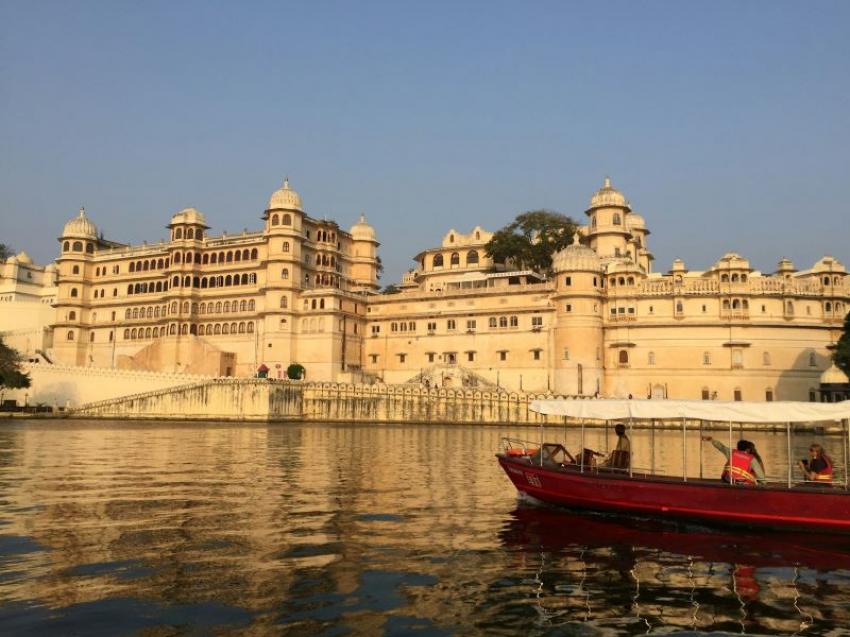
IndiGo will introduce daily non-stop flights to Udaipur from Noida International Airport and Navi Mumbai International Airport, starting October 25 and November 15, 2026 respectively.

Etihad Airways and Nigerian carrier Ibom Air have signed an interline agreement that will allow passengers travelling with Etihad to connect beyond Lagos and Accra to five cities in Nigeria on a single ticket.