
Sponsored Post | @notintownlive | 27 May 2020, 05:33 am
The very word “prevention” indicates the fact that something needs to be nipped in the bud. In the following paragraphs, we’ll talk about the prevention of injuries in sports, but all the above facts can also refer to the population of recreational athletes. The only difference is in the training load.
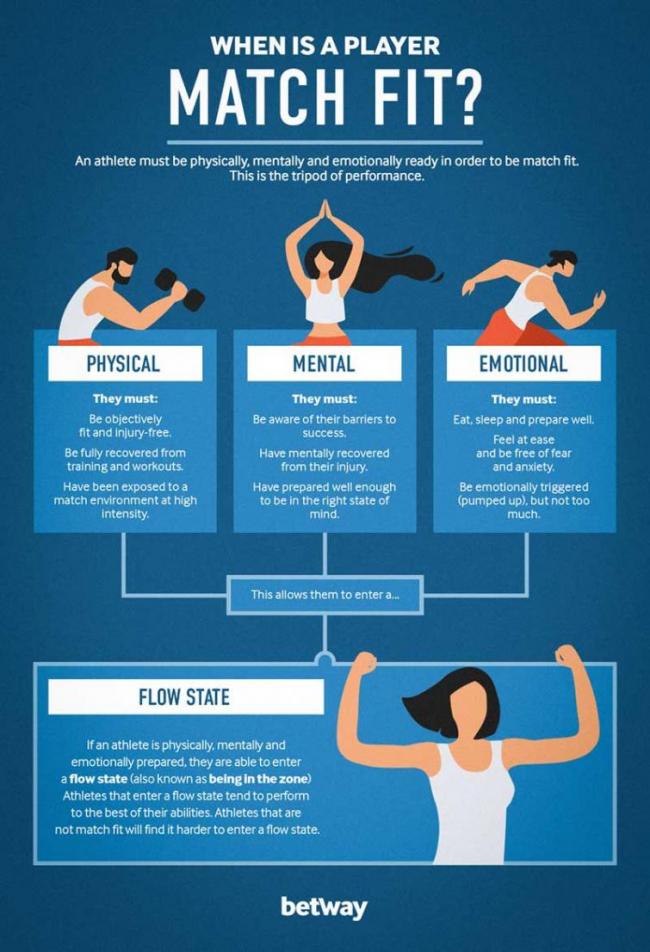
But, before we dig into that, let’s share some thoughts on what the match fitness actually is. Simply, there’s a difference between being fit and being ready to play in a professional, competitive game.
This term, match fitness, is a trending topic in sports at the moment when the novel coronavirus pandemic paralyzed sports activities, in addition to every other aspect of life, and when athletes are about to resume training and activities after a break of several months.
What Do Pro Athletes Say About Match Fitness?
Ryan Fredericks tried to explain match fitness on an example of a highly exhausting football league such as the English Premier League.
“The difference is huge. You can spend as long as you want – years, even – running up and down the pitch or running around cones, but 10 minutes in a Premier League match is 100 times harder than any of that,” says West Ham defender.
“You can’t fake anything on a Premier League pitch. You have to react to so many things – mentally, as well. If you get caught out, you’re stuck.”
Cricket player Kevin Pietersen, England’s third-highest run-scorer of all time across all formats, recently told Betway that match fitness to him is something else.
“Confidence is closely related to being match fit. No player is free of niggles or little injuries, but I never ever went into an England match without being confident that I had put in the perfect preparation for it. Perfection in my practice was the reason for my consistent performances.”
Entering and Leaving Season Injury-Free as an Ultimate Goal
Under the influence of external and internal factors, it’s important to find a balance in order for an athlete to enter and leave the competition season without getting injury of any type.
Coaches and other experts in the field of sports can’t influence age, gender, and genetics but certainly can influence flexibility, muscle strength, and level of training. In addition to the mentioned factors, it’s extremely important to know the anamnesis of an athlete’s health condition that’s being worked on in order to cover all the circumstances of the athlete's sports experience before coming to training, in other words - the competition season.
The parts of the whole that have been mentioned above refer to internal factors, and when it comes to external factors, in that sense we mean training, recovery, nutrition, psychological state, social life, climatic factors ... And everything described is an integral part of the prevention of possible injuries in sports.
Every part of the whole has its role in prevention down to the smallest detail:
Training
Respect for all parts of training from warm-up to stretching, adapting training to each individual and the sport in which he/she participates, the position in which he plays, control of exercises, the intensity of exercises, use of protective elements when performing exercises…
Psychological Factor
The stress factor is very pronounced in sports. Citing this reason, an expert who works with athletes should recognize when rest is necessary, when support in the form of motivation is important, and when a suggestion for some kind of correction in an athlete is important. In addition to classic stress, which is an unavoidable factor in sports, training requires athletes to be focused on what they need to do, as well as to have the ability to isolate all interfering factors in order to complete their training or match in the best possible way.
Nutrition
Inadequate nutrition and untimely replacement of glycogen stores after intense training can reduce athletic performance and lead to injury. It’s necessary to know the principle of renewing muscle glycogen after exercise in order to preserve soft tissue.
Water
Hydration is an integral part of the field of nutrition and plays an important role in injury prevention because it can lead to dehydration. This, in turn, contributes to a decrease in the efficiency of the muscular system, reduces blood volume, which disrupts thermoregulation and leads to circulatory disorders. So, before, during, and after training (competition), fluid intake is very important.
For the End
With a specific, balanced diet, water, and intake of micronutrients, injuries are prevented, that is, the speed of recovery is affected in a positive way.
- Sundeep Bhutoria brings Bengal’s Mahalaya to the nation in Hindi – Mahishasur Mardini ki Gatha
- VeeCycle Works Signs MoU with AP Govt for Rs 150 Cr Recycling Project in Visakhapatnam
- Kolkata culturist Sundeep Bhutoria inaugurates India National Stand at Frankfurt Book Fair 2026
- Where governments stop, institutions begin: Culture Minister Shekhawat salutes Prabha Khaitan Foundation
- National Award-winning ‘Ramnami’ puts spotlight on community behind Chaltabagan’s ‘Nishan’ theme
- Thiagarajar Polytechnic College receives Education Excellence Award for the fifth time
- Sona College of Technology's 25th graduation day: 1,325 students receive BE, BTech, ME, MCA, MBA and PhD degrees
- ‘We are the worst storytellers’: Suhel Seth on India’s failure to market itself at 'Kitaab' book launch
- Sona College of Technology welcomes 2,400 freshers to UG, PG programmes
- ‘Children shouldn’t carry the burden’: Social activist Sundeep Bhutoria urges Centre to enforce 10% school bag rule



IndiGo will introduce daily non-stop flights to Udaipur from Noida International Airport and Navi Mumbai International Airport, starting October 25 and November 15, 2026 respectively.

Etihad Airways and Nigerian carrier Ibom Air have signed an interline agreement that will allow passengers travelling with Etihad to connect beyond Lagos and Accra to five cities in Nigeria on a single ticket.

Tata Group-owned Air India on Monday announced that guests flying during Navratri will be served specially curated festive meals onboard its flights and at its lounges in Delhi and Mumbai.