
NITN | @notintownlive | 31 Jan 2024, 07:48 am
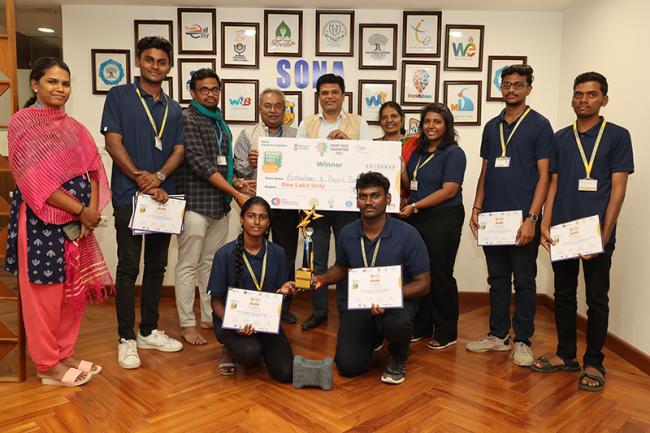 Sona College
Salem: The student team from Sona College of Technology in Salem secured first place in the Union Ministry of Education’s Smart India Hackathon 2023 national competition.
Their innovative solution aims to address pollution caused by construction and demolition waste generated in the construction industry.
This victory marks a record for the Civil Engineering students, who have now won the top position in the Smart India Hackathon three times.
The solution involves utilizing construction and demolition waste along with empty plastic cement bags to create robust bricks and paver blocks that can be reused in construction activities.
This achievement comes with a cash award of Rs 100,000 for the Sona College Civil Engineering student team, making it a hat trick for winning the first prize in the three successive Smart India Hackathons in 2020, 2022, and 2023. (There was no hackathon in 2021.)
The Union Ministry of Housing and Urban Affairs suggested the Smart India Hackathon organizers focus on identifying a solution for 'Effective management of construction and demolition waste.' This challenge attracted numerous student teams from engineering colleges and universities across India. The team leader, Harshini E K, a final year Civil Engineering student, found this Hackathon especially meaningful, as she was part of the Sona College team that also won the first prize in 2022.
Harshini E K’s team included R Mano (III-Year), Marga Dharshini (III-Year), Madhuraghavan V (III-Year), M Hari Prasath (III-Year), Kirubanithi (II-Year), and Dhinesh Kannan (II-Year).
The team received mentorship from Sona College of Technology Dean of R&D and Professor of Civil Engineering Dr R Malathy and Assistant Professor Dr Karuppasany Narayanan.
In the 2023 Hackathon, Sona College entered three teams—two teams from the Civil Engineering Department in the hardware edition and a team from the Fashion Technology department in the software edition. The results were announced at the end of December 2023 in Coimbatore.
Working continuously for five days, the team developed a solution demonstrating that construction and demolition waste can be sustainably redeployed on a commercial scale.
The process involved crushing waste, sieving it into coarse and fine aggregates, and adding it to a molten mixture prepared using empty polypropylene bags used for transporting cement. This molten compound binds the coarse and fine aggregates in paver blocks or bricks.
This unique solution works with all types of construction and demolition waste, regardless of the quality of concrete or materials used, and delivers paver blocks with a significantly better compressive strength than kiln-baked mud bricks within three hours.
The team also established that supplying oxygen during the block production process results in higher quantity of carbon dioxide with a purity of 99.99 percent. This carbon dioxide can be liquefied for commercial use with minimal energy requirements, providing the project with an added sustainable edge.
"In moulding Civil engineering professionals, our focus was traditionally on the technical aspects of designing and building structures. However, with Sona Group's commitment to sustainability, our researchers now actively pursue responsible development, with an eye on protecting the environment and making Planet Earth a better place to live," said Chocko Valliappa, Vice Chairman of Sona Group of Institutions.
“The enthusiasm to address the significant challenge of construction and demolition waste fuelled the motivation of the student team from Sona College during an intense five-day endeavour. With unwavering commitment and rigour, they pursued a technological solution, simulating industrial conditions in the lab and actively participating in mentoring sessions,” said R Malathy, the Dean of R&D, Sona College of Technology who guided the team.
“We encourage our students to participate in hackathons, industry projects, internships, and NPTEL courses beyond the syllabus. This ensures that their core education during the ‘world of study’ is complemented by hands-on ‘world of work’ experiences, contributing to our goal of moulding them into successful engineering professionals,” said Dr SRR Senthilkumar, Principal of Sona College of Technology.
- Manicktala Chaltabagan Lohapatty Durga Puja Committee wins numerous Awards as ‘Nishan’ theme captures hearts
- Bengal Guv R. N. Ravi inaugurates Chaltabagan Lohapatty Durga Puja’s 84th edition ‘Nishan — The Mark’
- Sundeep Bhutoria brings Bengal’s Mahalaya to the nation in Hindi – Mahishasur Mardini ki Gatha
- VeeCycle Works Signs MoU with AP Govt for Rs 150 Cr Recycling Project in Visakhapatnam
- Kolkata culturist Sundeep Bhutoria inaugurates India National Stand at Frankfurt Book Fair 2026
- Where governments stop, institutions begin: Culture Minister Shekhawat salutes Prabha Khaitan Foundation
- National Award-winning ‘Ramnami’ puts spotlight on community behind Chaltabagan’s ‘Nishan’ theme
- Thiagarajar Polytechnic College receives Education Excellence Award for the fifth time
- Sona College of Technology's 25th graduation day: 1,325 students receive BE, BTech, ME, MCA, MBA and PhD degrees
- ‘We are the worst storytellers’: Suhel Seth on India’s failure to market itself at 'Kitaab' book launch
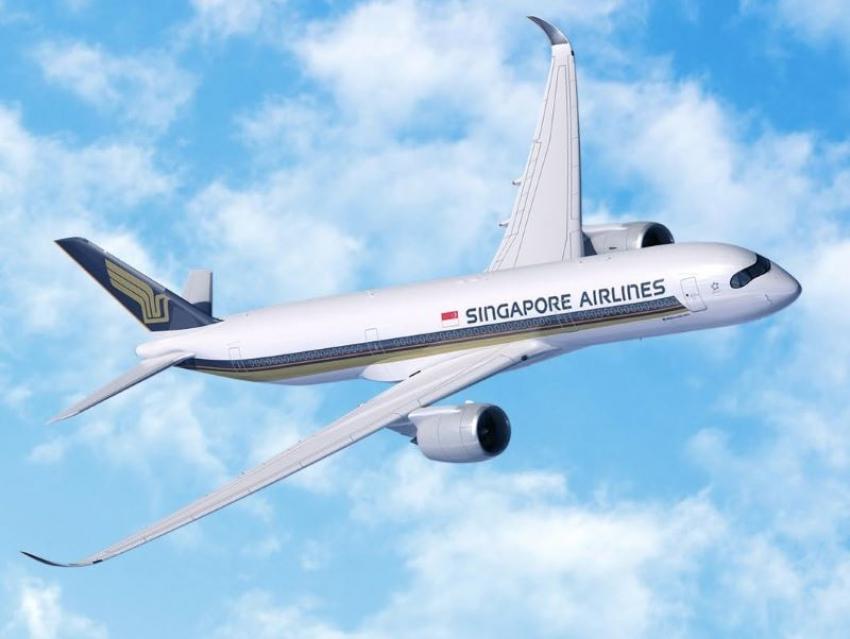
Singapore Airlines (SIA) is upgrading its in-flight entertainment system, KrisWorld, with new display technology, audio features, personalisation tools and high-speed internet connectivity. The changes are intended to give passengers more control over their entertainment and how they use their time on board.

Air India will launch non-stop flights between Delhi and Osaka’s Kansai International Airport on 2 February 2027, becoming the only airline to operate on the route. The airline will run four flights a week between the Indian capital and Osaka, Japan’s second-largest metropolitan area, using Boeing 787-8 aircraft.
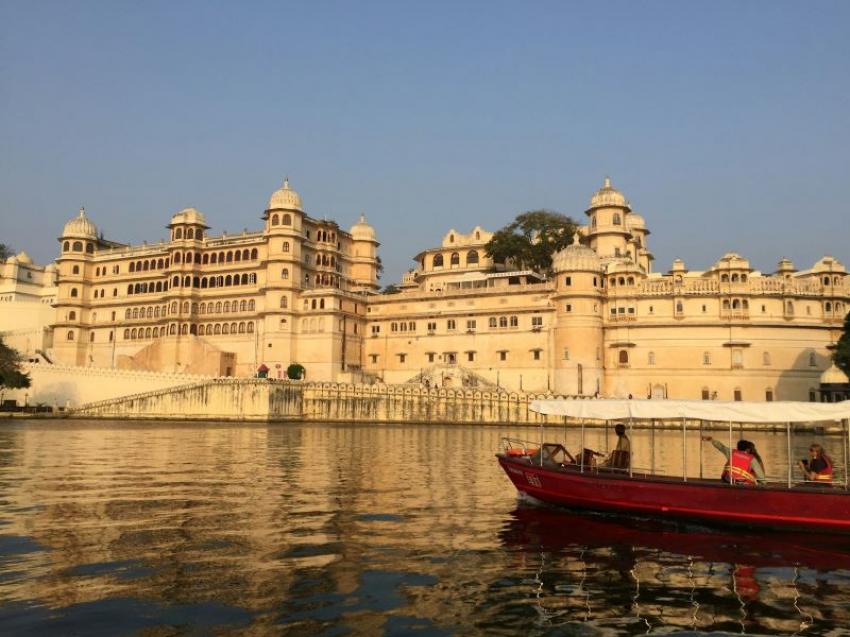
IndiGo will introduce daily non-stop flights to Udaipur from Noida International Airport and Navi Mumbai International Airport, starting October 25 and November 15, 2026 respectively.