
NITN | @notintownlive | 12 Aug 2024, 02:15 am
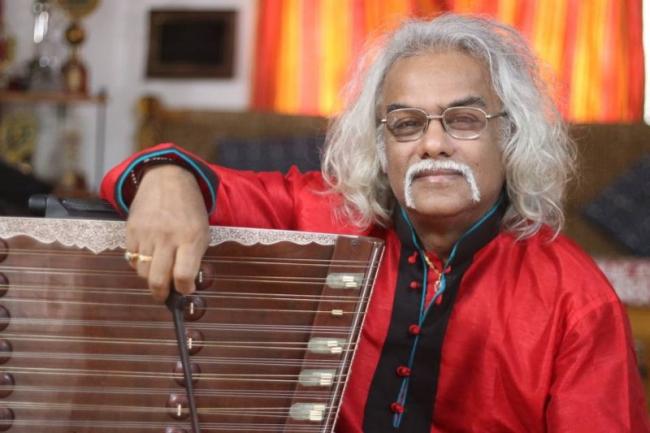 Tarun Bhattacharya
Indian Santoor icon Tarun Bhattacharya recently said he feels the traditional Guru-Shishya Parampara in Indian classical music is getting eroded due to the recent implementation of Artificial Intelligence by the next generation of musicians.
He said, “One of the core aspects of the Guru-Shishya Parampara is the personal bond between the guru and the shishya. This relationship goes beyond mere transmission of knowledge; it encompasses emotional and spiritual guidance."
"The digital learning environment lacks this depth of personal interaction, potentially leading to a more transactional approach to music education," the Santoor icon said.
He said that the loss of oral tradition on which Indian classical music heavily relies on, nuances of ragas, intricate rhythms, and the emotive aspects of performances are best conveyed through live demonstrations and personal corrections.
"Digital platforms and AI, despite their advancements, cannot fully capture or transmit these subtleties. This can result in a more mechanical understanding and rendition of the music," he said.
Tarun Bhattacharya said, “The Guru-Shishya Parampara is a time-honoured tradition in Indian classical music. It is a deeply personal and immersive form of mentorship. This ancient pedagogical method involves a lifelong commitment, where knowledge is transmitted orally and experientially from the guru (teacher) to the shishya (student) in a close-knit relationship. However, the advent of technology has profoundly impacted this venerable tradition."
He mentioned the need to adopt a hybrid approach that can provide a balanced solution, combining the strengths of both worlds.
Supplementing traditional learning through AI-based apps is helping students with pitch correction, rhythm practice and improvisation techniques, reinforcing their learning from their gurus.
He said digital platforms enable gurus to reach a wider audience and connect with students from different parts of the world.
He said preserving and documenting knowledge with digital archiving, recordings, and AI-driven documentation ensures valuable knowledge and rare compositions are not lost with the passing of older generations.
Tarun Bhattacharya concludes, “ Guru-Shishya Parampara in Indian classical music faces significant challenges in the digital age. While Google and AI have democratized access to knowledge and made learning more convenient, they risk diluting the personal, emotional, and spiritual dimensions of traditional mentorship. However, by adopting a balanced, hybrid approach, it is possible to harness the benefits of technology while preserving the essence of this revered tradition. The future of Indian classical music may well depend on our ability to integrate these two worlds harmoniously.”
- Sundeep Bhutoria brings Bengal’s Mahalaya to the nation in Hindi – Mahishasur Mardini ki Gatha
- VeeCycle Works Signs MoU with AP Govt for Rs 150 Cr Recycling Project in Visakhapatnam
- Kolkata culturist Sundeep Bhutoria inaugurates India National Stand at Frankfurt Book Fair 2026
- Where governments stop, institutions begin: Culture Minister Shekhawat salutes Prabha Khaitan Foundation
- National Award-winning ‘Ramnami’ puts spotlight on community behind Chaltabagan’s ‘Nishan’ theme
- Thiagarajar Polytechnic College receives Education Excellence Award for the fifth time
- Sona College of Technology's 25th graduation day: 1,325 students receive BE, BTech, ME, MCA, MBA and PhD degrees
- ‘We are the worst storytellers’: Suhel Seth on India’s failure to market itself at 'Kitaab' book launch
- Sona College of Technology welcomes 2,400 freshers to UG, PG programmes
- ‘Children shouldn’t carry the burden’: Social activist Sundeep Bhutoria urges Centre to enforce 10% school bag rule



IndiGo will introduce daily non-stop flights to Udaipur from Noida International Airport and Navi Mumbai International Airport, starting October 25 and November 15, 2026 respectively.

Etihad Airways and Nigerian carrier Ibom Air have signed an interline agreement that will allow passengers travelling with Etihad to connect beyond Lagos and Accra to five cities in Nigeria on a single ticket.

Tata Group-owned Air India on Monday announced that guests flying during Navratri will be served specially curated festive meals onboard its flights and at its lounges in Delhi and Mumbai.