
19 Dec 2016, 12:00 pm
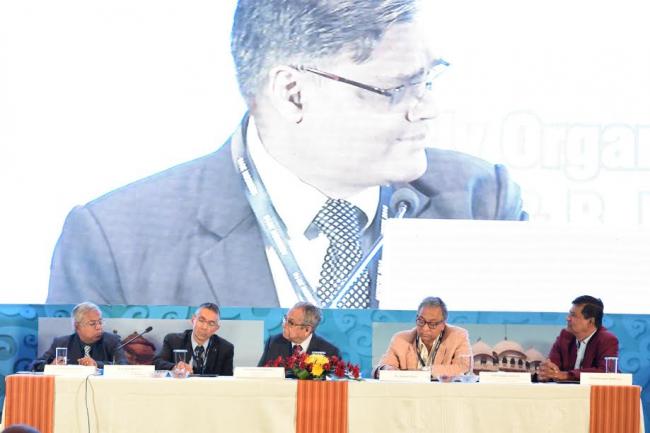
"Acute hypoxemic respiratory failure (AHRF) is severe arterial hypoxemia that is refractory to supplemental oxygen and respiratory failure results from inadequate gas exchange by the respiratory system," Consultant Respiratory Physician of UK's Hull & East Yorkshire NHS Hospitals, Dr. Simon Hart, said here at the MEDICON International 2016.
Talking about hypoxaemia, Dr. Simon Hart said, "Hypoxaemia is dangerous when SaO2 is less than 85% and PaO2 is less than 7 kPa."
Dr. Hart also said that the SpO2, which is an estimate of the amount of oxygen in the blood, was not aimed to 100 for the risk of hypercapnic respiratory failure in acute exacerbation of COPD (Chronic Obstructive Pulmonary Disease).
"100 SpO2 causes delayed recognition of deteriorating patient and it may generate free radicals, exacerbating tissue injury," Dr. Hart added.
The physician also suggested not to waste time with the NIV (Non-Invasive Ventilation), during the treatment of hypoxaemia.
"Administering oxygen during treatment is very important. The delivery of oxygen should be 15 LPM via reservoir mask to a critically ill patient, 5-10 LPM and 2-6 LPM via simple face mask and nasal cannulae respectively to a less unwell patient and 1-2 LPM via nasal cannulae and 28% or 24% via venturi mask to patient, who is at the risk of hypercapnia," Dr. Simon Hart added.
He also noted that high altitude, which led to cause breathlessness, might result hypoxaemia.
"During a long distance flight at a high altitude, we feel breathlessness. It's okay if the flight journey is of 2-3 hours. But it could trouble the people with heart disease, when the flight journey is more than 10 hours," Hart further said.
Starting from today, the third edition of Medicon International conference, jointly hosted by Peerless Hospital, B. K. Roy Foundation and Royal College of Physicians of Edinburgh, will continue till Sunday (Dec 18).
- Sundeep Bhutoria brings Bengal’s Mahalaya to the nation in Hindi – Mahishasur Mardini ki Gatha
- VeeCycle Works Signs MoU with AP Govt for Rs 150 Cr Recycling Project in Visakhapatnam
- Kolkata culturist Sundeep Bhutoria inaugurates India National Stand at Frankfurt Book Fair 2026
- Where governments stop, institutions begin: Culture Minister Shekhawat salutes Prabha Khaitan Foundation
- National Award-winning ‘Ramnami’ puts spotlight on community behind Chaltabagan’s ‘Nishan’ theme
- Thiagarajar Polytechnic College receives Education Excellence Award for the fifth time
- Sona College of Technology's 25th graduation day: 1,325 students receive BE, BTech, ME, MCA, MBA and PhD degrees
- ‘We are the worst storytellers’: Suhel Seth on India’s failure to market itself at 'Kitaab' book launch
- Sona College of Technology welcomes 2,400 freshers to UG, PG programmes
- ‘Children shouldn’t carry the burden’: Social activist Sundeep Bhutoria urges Centre to enforce 10% school bag rule



IndiGo will introduce daily non-stop flights to Udaipur from Noida International Airport and Navi Mumbai International Airport, starting October 25 and November 15, 2026 respectively.

Etihad Airways and Nigerian carrier Ibom Air have signed an interline agreement that will allow passengers travelling with Etihad to connect beyond Lagos and Accra to five cities in Nigeria on a single ticket.

Tata Group-owned Air India on Monday announced that guests flying during Navratri will be served specially curated festive meals onboard its flights and at its lounges in Delhi and Mumbai.