
NITN | @notintownlive | 26 Aug 2020, 06:06 am
New York: Tourism is much more than visiting cultural landmarks or swimming in tropical beaches; it is “one of the world’s most important economic sectors”, the UN chief said on Tuesday.
Launching his latest policy brief, on tourism, Secretary-General António Guterres, pointed out that the industry “employs one-in-every-ten people on Earth and provides livelihoods to hundreds of millions more”.
Strong data from the UN World Tourism Organization (UNWTO) shows that 100 to 120 million direct tourism jobs are at risk. And the UN Conference on Trade and Development (UNCTAD) forecasts a loss of 1.5 to 2.8 per cent of global GDP.
Describing tourism as an opportunity to experience the world’s cultural and natural riches, bringing people closer to each other and highlighting our common humanity, Mr. Guterres said: “One might say that tourism is itself one of the wonders of the world”.
A sobering glimpse
Among other things, the brief finds that, due to the unprecedented shutdown of global travel and trade, tourism may be the sector worst affected by the coronavirus.
“It has been so painful to see how tourism has been devastated by the COVID-19 pandemic”, the UN chief reflected.
Moreover, there are secondary impacts, such as increase in poaching, as people search for other sources of income.
In the first five months of this year, international tourist arrivals have fallen by more than half and around $320 billion in tourism exports were lost, according to the top UN official.
“Many are in the informal economy or in micro, small and medium-sized enterprises, which employ a high proportion of women and young people”, Mr. Guterres continued.
As for women, rural communities, indigenous peoples and many other historically marginalized populations, “tourism has been a vehicle for integration, empowerment and generating income”, he added.
Conservation pillar
Tourism is also a key pillar for the conservation of natural and cultural heritage.
“The fall in revenues has led to increased poaching and habitat destruction in and around protected areas, and the closure of many World Heritage Sites has deprived communities of vital livelihoods”, informed the UN chief.
Rebuilding
The Secretary-General underscored the importance of rebuilding the tourism sector in a way that is “safe, equitable and climate friendly”.
Noting that transport-related greenhouse gas emissions could “rebound sharply if recovery is not aligned with climate goals”, he stressed that sustainable and responsible travel is imperative to support the millions that depend on tourism for their livelihoods.
Key areas
Mr. Guterres outlined five priority areas to aid recovery and re-establish an industry that is safe for host communities, workers and travellers.
His first task is to mitigate the socio-economic impacts of the crisis – particularly women’s employment and economic security.
Secondly, he suggests building resilience across the entire tourism sector.
Maximizing technology throughout the industry, including by promoting innovation and investing in digital skills, is his third priority.
His fourth point is to promote sustainability and green growth in managing the shift towards a resilient, carbon-neutral tourism sector.
And finally, he flags that partnerships must be fostered to responsibly ease and lift travel restrictions in a coordinated manner to restart and transform tourism towards achieving the Sustainable Development Goals (SDGs).
“Let us ensure tourism regains its position as a provider of decent jobs, stable incomes and the protection of our cultural and natural heritage”, concluded the Secretary-General.
Stronger together
In addition to these priorities, UNWTO underscored that continued coordination and cooperation at every level is critical.
Emphasizing the guiding principle of “stronger together”, UNWTO’s leadership has warned against the short and long-term consequences of Governments taking unilateral decisions.
“The situation is changing every day”, said UNWTO chief Zurab Pololikashvili. “It is impossible today to make a forecast for the next year”.
Nuts and bolts
While UNWTO too the lead in drafting the brief, 13 other UN agencies, funds or programmes have contributed, including the International Labour Organization (ILO), UN Women and the UNCTAD.
Among other things, it found that, due to the unprecedented shutdown of global travel and trade, tourism may be the sector worst affected by COVID-19.
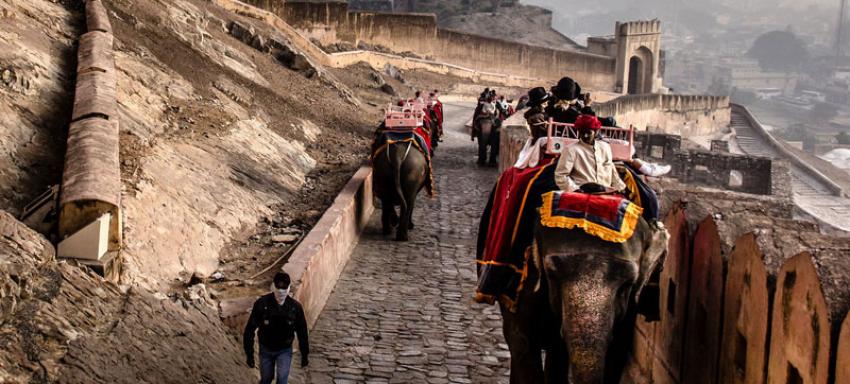
Photo caption and credit: Eric Ganz/UN Tourists in India take an elephant ride at the Amber Fort, outside of Jaipur.
- Planning India trip? Thai tourists can now get 30-day e-Visa without fee
- Phone, Wallet Stolen Abroad? Knowing These Steps Can Save Your Trip
- Travelling Abroad from India? Know How Much Foreign Currency You Can Carry
- Air India teams up with IHG, offers Maharaja Club Members reward points on hotel bookings
- Fujifilm’s new 609mm-equivalent lens brings serious long-range reach without the usual weight
- Google’s AI mode is becoming your travel agent—Here’s what it can now do
- Littering on trains to cost more? Railways doubles fine to Rs 1,000 — check other penalties
- Dubai Airport traffic crashes 31% in H1 amid US-Iran conflict
- Bali Backlash: Swiss Tourist Jailed After 'Crazy' Video Mocks Hindu Nyepi Holiday
- London’s Thames to witness Ganga Aarti: Here’s what’s happening on September 13



IndiGo has announced a new daily nonstop service between Mumbai and Hanoi, beginning October 25, 2026. The new route will expand the airline’s international network and improve connectivity with Vietnam’s capital, giving passengers more options and flexibility for travel between India and Vietnam.

Aviation major Emirates is taking its award-winning Premium Economy experience a step further with the launch of what it describes as the world’s first electrically powered Premium Economy seat, featuring a full-height adjustable privacy screen between every seat.
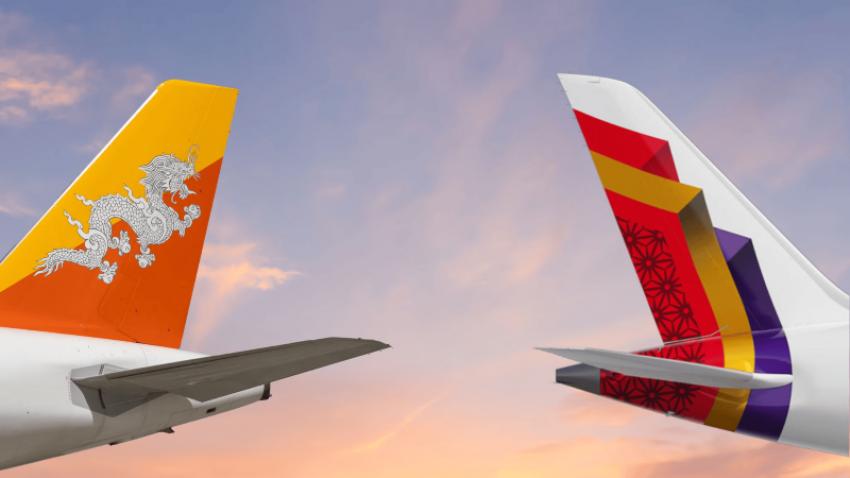
Air India and Drukair, Royal Bhutan Airlines, have entered into an interline partnership to enhance travel convenience and strengthen network connectivity between India, Bhutan, and destinations beyond.