
NITN | @notintownlive | 23 Oct 2026, 08:03 am
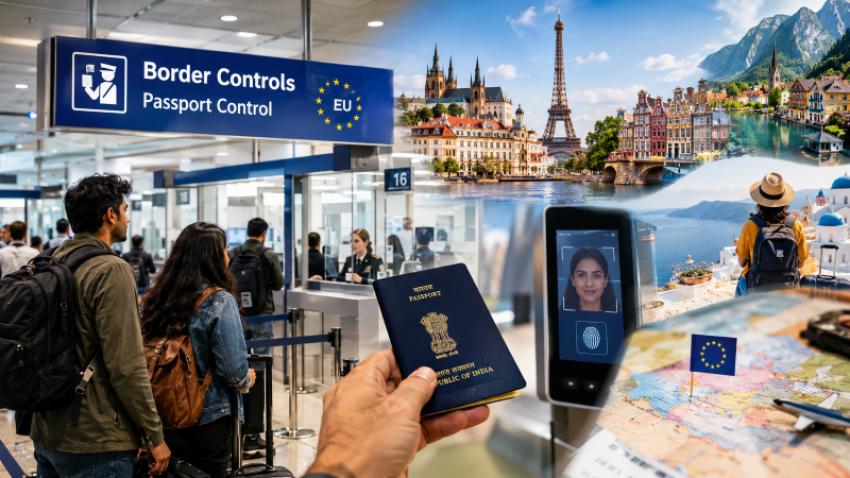 Europe
Representational photo: ChatGPT
Europe has replaced routine passport stamping with digital entry and exit records for eligible non-EU travellers visiting the Schengen Area for short stays. The European Union’s Entry/Exit System (EES) began its phased rollout on October 12, 2025, and became fully operational on April 10, 2026.
For Indian travellers planning a European holiday, the change affects how their border crossings are recorded and how their identities are verified. However, the existing visa requirements and permitted duration of stay remain unchanged.
What has changed under the new system?
The EES records the entry and departure of eligible non-EU visitors, replacing routine manual passport stamps with electronic records. During the six-month rollout, passport stamping and digital registration operated alongside each other at participating border crossings. With the system now fully operational, routine manual stamping has ended for travellers covered by the EES.
The system records travellers’ personal and passport details, entry and exit dates, and biometric information. At the external Schengen border, travellers may have their facial images and fingerprints collected as part of the registration process. Children under 12 are exempt from fingerprint collection.
The system generally covers non-EU nationals, including Indian citizens, visiting participating countries for short stays of up to 90 days within any 180-day period, subject to applicable exemptions.
What Indian travellers should know about moving around Europe
After entering the Schengen Area, travellers can generally move between participating countries without routine immigration checks at every internal border.
For example, an Indian tourist entering through Vienna and continuing to Prague and Amsterdam would normally not undergo routine immigration checks at each of these internal borders. The EES records entry into and departure from the participating area rather than requiring separate immigration registration for every country visited.
When travellers leave the Schengen Area, their departure is recorded electronically. These records help border authorities monitor the length of visitors’ stays and identify potential overstays.
Have visa rules changed for Indian travellers?
No. The EES changes how border crossings are recorded, not the existing entry requirements. Indian citizens must continue to obtain a valid Schengen visa where required and comply with the applicable conditions of entry.
A few important points to remember:
- Carry your passport: Digital records do not eliminate the requirement to carry a valid passport and relevant travel documents.
- Keep track of your stay: The 90-day limit applies across the participating countries collectively, not separately to each destination.
- Be prepared for document checks: Schengen countries can temporarily reintroduce internal border checks, so travellers should remain ready to present their documents even when moving between member countries.
- Big visa reform: India reduces visa categories from 13 to 9, simplifies entry rules
- World's best beaches 2026: Goa's Palolem is Asia's no. 1 and sixth globally
- Delhi introduces Yamuna river cruise. Here's all you need to know
- Planning a holiday? These 5 ChatGPT tricks could change the way you travel
- Thailand to showcase wellness tourism as Phuket hosts Global Wellness Summit 2026
- Cambodia tourism eyes major boost through new partnership with Etihad Airways
- Indian travellers using UPI payments at Dubai Duty Free can now get 10 percent discount
- Country Club rolls out lifetime membership for seniors at ₹49,999, launches Türkiye tourism initiative
- Digi Yatra goes international! 7 Indian airports begin trials for overseas flyers
- Finland invites singles from around the world on all-paid blind-date dinner; application closes soon



Air New Zealand and One NZ have launched Air New Zealand Mobile, offering flexible eSIM travel plans for international visitors travelling around New Zealand and for New Zealanders travelling overseas.
Qatar Airways has entered into a new codeshare agreement with Porter Airlines, expanding its connections across Canada.

Emirates will mark Diwali on November 7 and 8 with traditional Indian sweets and festive food offerings for passengers travelling between Dubai and nine Indian destinations: Ahmedabad, Bengaluru, Kochi, Chennai, Delhi, Hyderabad, Thiruvananthapuram, Kolkata and Mumbai.