
News
Travel
Discovering Italian railway tracks
09 Mar 2015, 03:10 pm
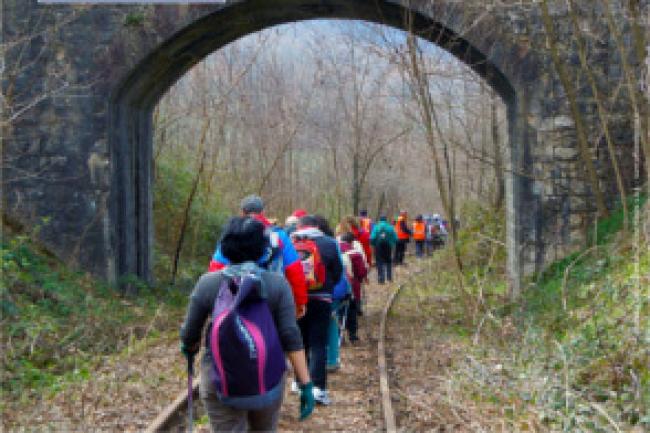
Rome, Mar 8 (NITN): Getting to know Italy through the history of its most hidden places which connected people and things for decades was possible on Sunday during the "Giornata delle ferrovie dimenticate" in its eighth edition.
Forgotten railways are those railway tracks where service was suspended for various reasons. Kilometres and kilometres scattered over almost all the Italian regions which can be covered on foot, by bicycle, on horseback or on trains running for the occasion; an opportunity to discover landscapes and difficult-to-access locations in Piedmont, Lombardy, Abruzzo, Latium, Molise, Apulia and so forth, throughout the peninsula, including Sicily and Sardinia.
Historical tracks that preserve traces of an industrial or agricultural past, which have a particular architectural or urban planning character, and which were open for visitors and tourists who will therefore be able to explore depots, tunnels and railway museums, or attend topical lectures and screenings.
Amongst the many "forgotten railways" on could be able to discover the Sulmona-Carpinone and Avezzano-Roccasecca lines in Abruzzo, cross the Alto Monferrato, following the former railway that connected Asti to Chivasso in Piedmont, or stroll along where the Trammino was: on foot along the tracks from Tirrenia to Marina di Pisa, in Tuscany.
The tracks opened on May 2, 1865, to allow the transport of minerals from the mine of San Leone (City of Assemini) to the coast of Capoterra.
More News
- IndiGo passengers get a surprise at 30,000 feet: Here's what they were asked to do
- Riyadh Airport shut until October 17 after deadly Houthi attacks
- Navi Mumbai Airport’s aviation push: TajSATS facility ready to handle rising passenger demand
- Malaysia stays visa-free for Indians through 2026, but entry rules still apply
- Singapore introduces tougher penalties for disruptive behaviour on public transport
- Etihad Rail launches passenger service between Dubai and Abu Dhabi
- New Zealand moves most visitor visa applications to enhanced online system
- Indian passport rules changed: New validity, fees for children and adults explained
- Azerbaijan makes F1 travel easier for Indian fans with visa on arrival
- Kanchenjunga Tourism Festival to showcase North Bengal’s heritage, culture, and sporting events across 3 locations


IndiGo expands Udaipur conn ...
IndiGo will introduce daily non-stop flights to Udaipur from Noida International Airport and Navi Mumbai International Airport, starting October 25 and November 15, 2026 respectively.

Etihad Airways, Ibom Air ag ...
Etihad Airways and Nigerian carrier Ibom Air have signed an interline agreement that will allow passengers travelling with Etihad to connect beyond Lagos and Accra to five cities in Nigeria on a single ticket.

Air India adds a festive fl ...
Tata Group-owned Air India on Monday announced that guests flying during Navratri will be served specially curated festive meals onboard its flights and at its lounges in Delhi and Mumbai.