
NITN | @notintownlive | 07 Dec 2018, 06:39 am
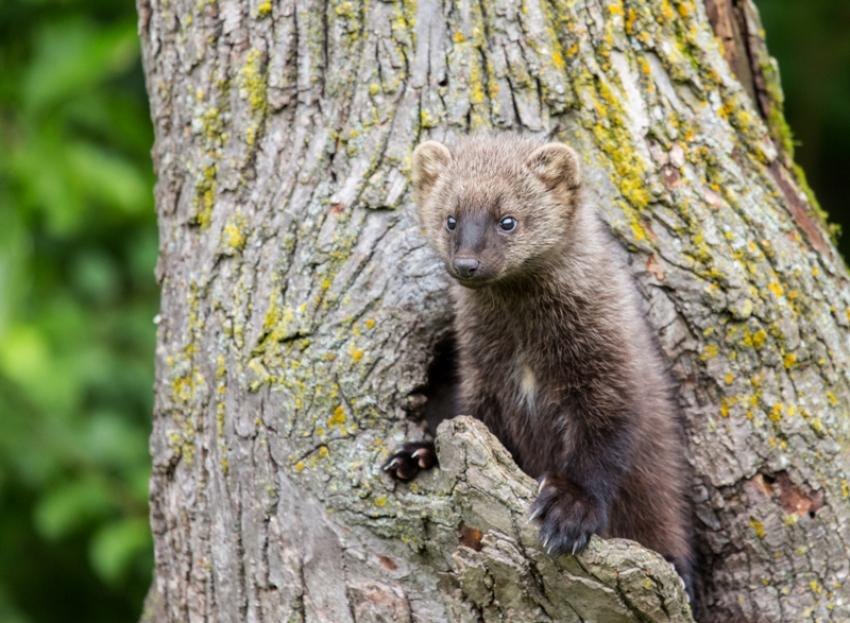
Sedro Woolley, WA, USA: State, federal, and partner biologists released six fishers this week in the Skagit River watershed of Ross Lake National Recreation Area, a unit of the North Cascades National Park Service Complex, as part of an effort to restore the species to Washington State of USA.
This is the first release in the North Cascades. Fishers are about the size of a house cat and are members of the weasel family. They were eliminated from Washington by the mid-1900s through over-trapping and habitat loss.
Fishers are currently listed as an endangered species by the state, and are being reviewed for protection under the federal Endangered Species Act. A voluntary fisher conservation program is available to private forest landowners that provides regulatory assurances should the species become listed. To date 49 landowners have enrolled 2.98 million acres in fisher conservation.
Fisher reintroduction efforts occurred in recent years on the Olympic Peninsula and near Mount Rainier in the South Cascades. The five females and one male released today were captured in Alberta, Canada as part of a multi-year project to reintroduce approximately 80 fishers to the North Cascades.
.jpeg)
They underwent veterinary checkups at the Calgary Zoo and were equipped with radio transmitters to track their movements over time. Conservation Northwest supports ongoing fisher monitoring with volunteers and remote cameras through its Citizen Wildlife Monitoring Project. In late 2015 and early 2016, 23 fishers, including 11 females and 12 males were released in Washington’s southern Cascades in Gifford Pinchot National Forest (GPNF).
In late 2016 and early 2017, 46 fishers were released in nearby areas of GPNF and in Mount Rainier National Park. Since then, monitoring efforts show released animals have successfully established themselves throughout the Olympic Peninsula and the southern Cascades, and have begun to reproduce.
Joining the partners in the event were representatives from the Upper Skagit Indian Tribe, the Sauk-Suiattle Indian Tribe, Lummi Indian Nation, and Nooksack Indian Tribe.
Staff from the offices of Senator Cantwell and Representative DelBene were also in attendance. “Watching the fishers return to their native forests of North Cascades National Park Service Complex after a long absence was inspiring,” said Karen Taylor-Goodrich, North Cascades National Park Service Complex Superintendent. “It was an honor to have the Upper Skagit Indian Tribe, the Sauk-Suiattle Indian Tribe, Lummi Indian Nation, and Nooksack Indian Tribe attend, bringing their blessings and songs.”
“We are excited to work with so many committed people to reintroduce fishers into another area where they have lived historically,” said Hannah Anderson, WDFW’s listing and recovery manager. “Fisher enthusiasts ranging across nations have come together to work toward robust wildlife populations with the reintroduction of these animals in Washington.” Fishers are related to wolverines and otters and are native to the forests of Washington, including the Cascade mountain range. This elusive carnivore preys on various small mammals – mountain beavers, squirrels and snowshoe hares – and is one of the few predators of porcupines.
“The North Cascades are a wild and iconic piece of the Pacific Northwest’s natural heritage and today they’re wilder and healthier with the return of the fisher to North Cascades National Park Service Complex,” said Mitch Friedman, Executive Director of Conservation Northwest. “We’re thrilled to be a part of this historic reintroduction effort, and thankful to all the scientists, agencies, and supporters who made it possible.”
“As one of Canada’s leading conservation organizations, we are delighted to lend our expertise in the field of reintroduction science to this international collaboration focusing on this endangered species,” said Dr. Clément Lanthier, president and CEO, Calgary Zoo.
“Fishers know no borders and it is only we when work together without divisions that we can truly make a difference for species at risk around the world.”
Support and funding for fisher reintroductions comes from WDFW, NPS, Conservation Northwest, Calgary Zoo, the U.S. Fish and Wildlife Service, the U.S. Forest Service, Washington’s National Park Fund, Northwest Trek, Pittman-Robertson Funds and State Wildlife Grants, and State Personalized License Plates, among others.
- IndiGo passengers get a surprise at 30,000 feet: Here's what they were asked to do
- Riyadh Airport shut until October 17 after deadly Houthi attacks
- Navi Mumbai Airport’s aviation push: TajSATS facility ready to handle rising passenger demand
- Malaysia stays visa-free for Indians through 2026, but entry rules still apply
- Singapore introduces tougher penalties for disruptive behaviour on public transport
- Etihad Rail launches passenger service between Dubai and Abu Dhabi
- New Zealand moves most visitor visa applications to enhanced online system
- Indian passport rules changed: New validity, fees for children and adults explained
- Azerbaijan makes F1 travel easier for Indian fans with visa on arrival
- Kanchenjunga Tourism Festival to showcase North Bengal’s heritage, culture, and sporting events across 3 locations

IndiGo will introduce daily non-stop flights to Udaipur from Noida International Airport and Navi Mumbai International Airport, starting October 25 and November 15, 2026 respectively.

Etihad Airways and Nigerian carrier Ibom Air have signed an interline agreement that will allow passengers travelling with Etihad to connect beyond Lagos and Accra to five cities in Nigeria on a single ticket.

Tata Group-owned Air India on Monday announced that guests flying during Navratri will be served specially curated festive meals onboard its flights and at its lounges in Delhi and Mumbai.