
NITN | @notintownlive | 18 Feb 2026, 04:39 am
 Blue Cities
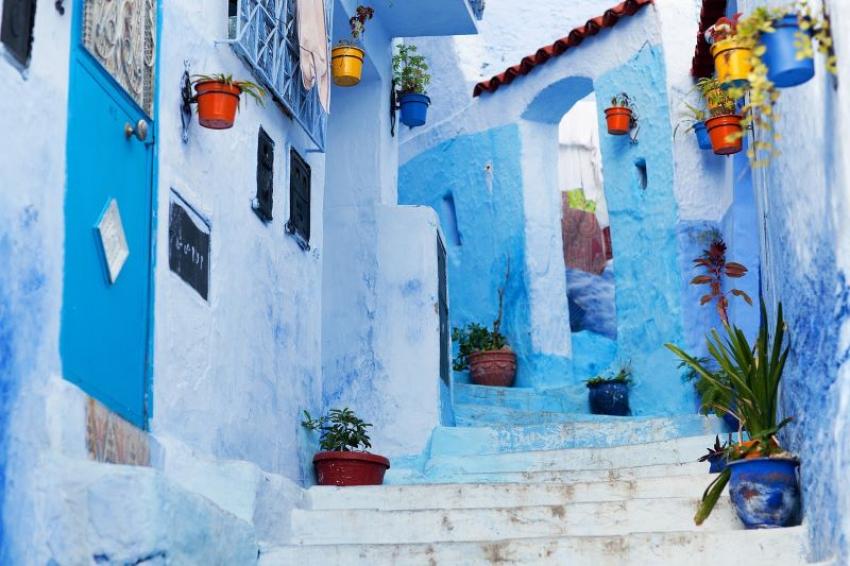
Chefchaouen is known as the “Blue Pearl” of Morocco. Photo: Pixabay
Across the world, colours often define the visual identity of entire towns and cities. They shape mood, memory, and even identity. Some destinations are known for golden deserts, others for whitewashed serenity or pastel waterfronts.
Among all colour-themed destinations, blue cities hold a special fascination. Cool, calming, and almost surreal at times, these places feel like they exist in a palette rather than on a map. Whether born from history, belief, climate, or coincidence, their blue facades create atmospheres that are both striking and soothing — inviting travellers to slow down and see the world through a different shade.
Here are five of the most beautiful blue cities in the world, each with its own story behind the shade.
Chefchaouen, Morocco
Known as the “Blue Pearl” of Morocco, Chefchaouen is tucked away in the dramatic Rif Mountains, far from the rush of Morocco’s imperial cities. Walking through its narrow, winding streets feels like drifting inside a calm blue ocean. Every wall, staircase, and doorway is painted in layered shades — from soft sky blue to deep indigo — creating a soothing, almost meditative atmosphere.
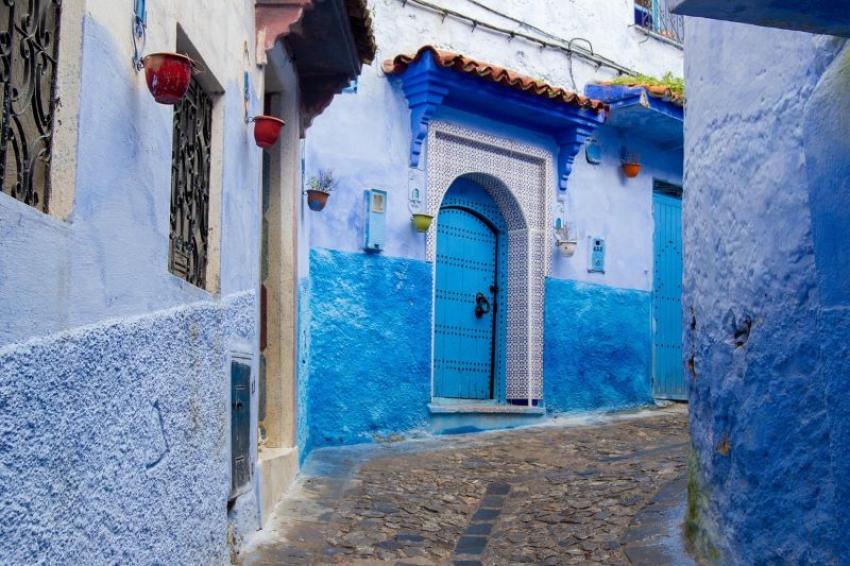 Every wall, staircase, and doorway in Chefchaouen is painted in various shades of blue. Photo: Pixabay
There are many theories behind this iconic colour palette. One popular belief traces it to Jewish refugees who settled here in the 15th century and painted the town blue to symbolise heaven and spirituality. Others say the colour helps repel mosquitoes — a practical benefit that became an aesthetic tradition.
Beyond its visual charm, Chefchaouen is a favourite among photographers and hikers, thanks to the striking contrast of blue walls against the surrounding green mountains. The town moves at an unhurried pace — perfect for lingering over traditional mint tea or browsing local markets filled with handmade blankets, woven textiles, and rustic pottery.
Jodhpur, India
Often called the “Blue City,” Jodhpur rises from the edge of the famous Thar Desert in a sea of azure. The most striking view comes from above, where a dense line of blue-painted houses wraps itself around the imposing Mehrangarh Fort like a vast indigo carpet spread across desert sand.
The colour wasn’t always universal. Historically, only Brahmins — the priestly class — painted their homes blue to signify status and social identity. Over time, however, the practice spread across the old city, transforming the entire landscape.
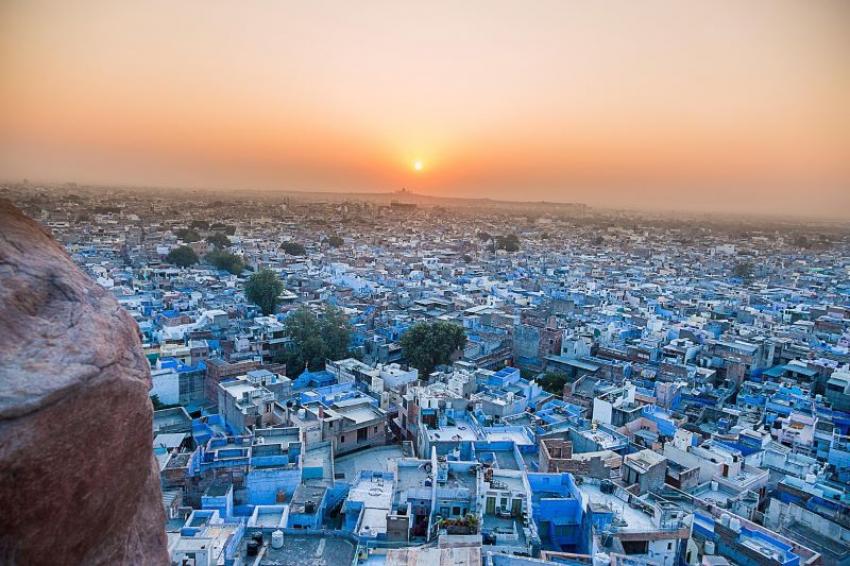 Blue-painted houses in Jodhpur are like a vast indigo carpet spread across the desert sand. Photo: Pixabay
There were practical reasons too. Blue lime wash helped keep homes cool during the scorching Indian summers and also acted as a deterrent to termites — a valuable advantage in the desert climate.
Today, Jodhpur’s blue lanes are anything but quiet. The city pulses with life — the air scented with spices, the rhythm of local music echoing through bazaars, and flashes of marigold and red turbans breaking the monochrome. It is vibrant, chaotic, and deeply authentic.
Santorini, Greece
Santorini’s white-and-blue palette has become the visual imagery of the Greek islands. In villages like Oia and Fira, cube-shaped houses gleam in brilliant white, designed to reflect the harsh Mediterranean sun. Crowning them are church domes painted in striking cobalt blue — a colour theme that mirrors the Greek flag itself.
The island’s geography makes the setting even more dramatic. Santorini is built along the rim of a massive volcanic crater known as caldera, meaning homes perch on cliffs with uninterrupted views of the deep blue Aegean Sea. From almost every window, the horizon feels impossibly close.
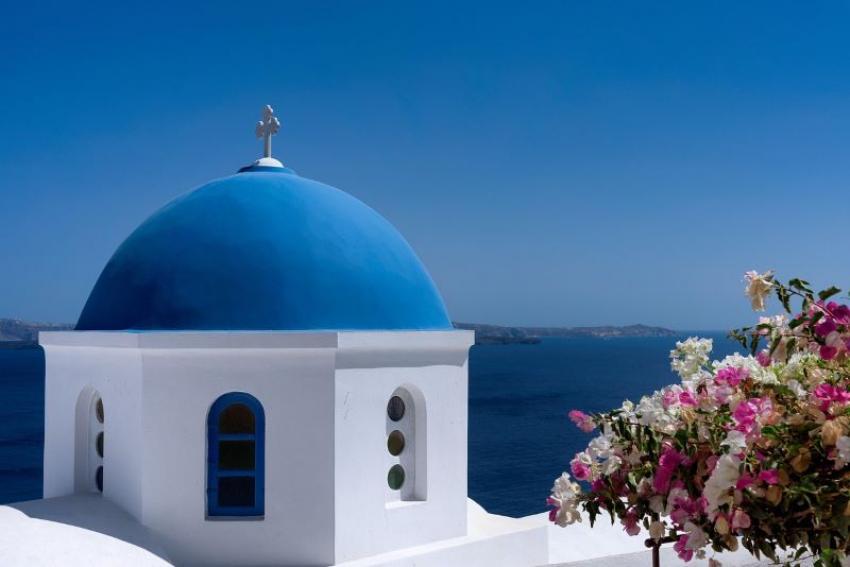 White-and-blue palette of Santorini mirrors the Greek flag. Photo: Pixabay
Despite its popularity, the town retains an air of romance. Santorini is widely considered one of the most romantic places in the world. At sunset, the transformation is magical — white walls turn honey-gold while the blue domes glow softly against the darkening sky, creating a scene that feels both serene and cinematic.
Sidi Bou Said, Tunisia
Perched on a steep cliff overlooking the Mediterranean, Sidi Bou Said looks like it has been painted into existence. This charming Tunisian village follows a strict blue-and-white theme — bright white facades paired with vivid “Tunis blue” doors, shutters, and wrought-iron balconies.
The tradition dates back to the 1920s, when a French artist fell in love with the village and encouraged the now-iconic colour scheme. What began as an artistic vision soon became a defining identity.
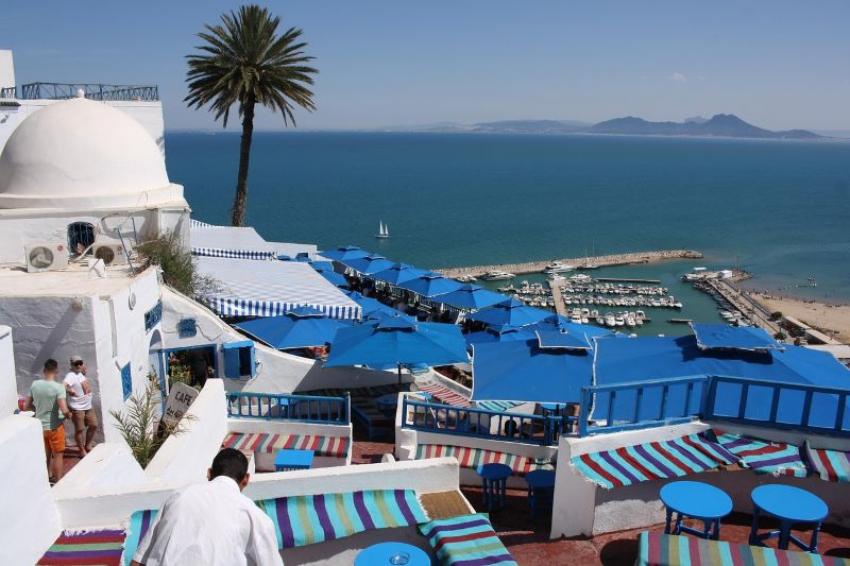 The iconic colour scheme of Sidi Bou Said was inspired by a French artist back in the 1920s. Photo: Pixabay
Sidi Bou Said has long attracted creative minds. Over the decades, it has been home to writers, painters, and musicians drawn to its luminous light and tranquil setting. Walking through its cobblestone paths feels like stepping into a living canvas — magenta bougainvillea spilling over blue railings, sunlight bouncing off white walls, and glimpses of the sea appearing between archways.
Every corner feels composed, deliberate, and quietly poetic.
Júzcar, Spain
Unlike the others, Júzcar’s transformation into a blue town is surprisingly recent — and cinematic. This small village in Spain’s Andalusian mountains was originally a traditional white pueblo. In 2011, everything changed when it was selected as the filming location for The Smurfs movie.
As part of the promotion, the entire village — houses, church, cemetery, and even public buildings — was painted bright Smurf blue. The plan was temporary. But the colour brought unexpected fame and visitors, and residents voted to keep it.
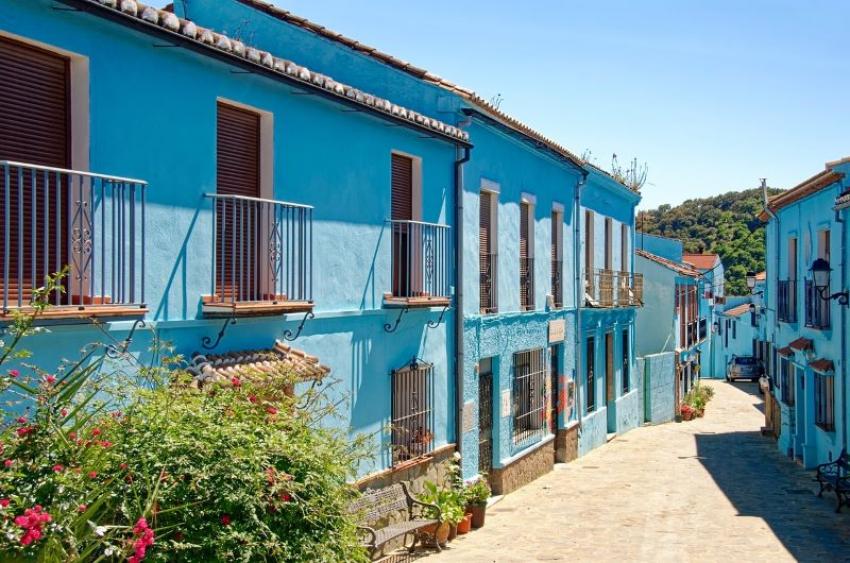 Júzcar is Spain’s only fully blue village. Photo: Pixabay
Today, Júzcar stands as Spain’s only fully blue village. Surrounded by chestnut forests and rugged hills, the electric blue structures create a playful contrast with the natural landscape. Murals, Smurf statues, and themed elements add a whimsical layer, but beyond the novelty lies a genuine story of reinvention — how a quiet rural town reshaped its identity through colour.
What makes Júzcar special is that its blue isn’t rooted in religion or climate — but in community choice, storytelling, and modern cultural influence.
- Sweet Memory: How a Kolkata Durga Puja Is Retelling Bengal’s Love Affair With Mishti
- Kosha Mangsho Roll to Gurer Sandesh Flan: Starbucks Kolkata unveils special Pujo menu blending Bengali flavours with global favourites
- Ganesh Chaturthi in the Skies: What Air India Has in Store for Flyers in its Lounges
- US Envoy Sergio Gor gets a taste of Darjeeling, enjoys Toy Train ride, tea, and local culture
- 1000 Islands: Back to the Waters That Never Left Me
- Priority Pass finally passed the test at JFK: One card, one lounge, a small victory in New York
- Do Not Miss This Museum When You Are in Purulia Next
- Texas Barbecue Takes to the Skies as American Airlines Expands Pecan Lodge Partnership
- Want a Taste of Spain? Taj Taal Kutir Brings 'Spanish Merienda' to Kolkata
- Explore This Hidden Gem in Arunachal - India's 101st Ramsar Site

Singapore Airlines (SIA) is upgrading its in-flight entertainment system, KrisWorld, with new display technology, audio features, personalisation tools and high-speed internet connectivity. The changes are intended to give passengers more control over their entertainment and how they use their time on board.
Air India will launch non-stop flights between Delhi and Osaka’s Kansai International Airport on 2 February 2027, becoming the only airline to operate on the route. The airline will run four flights a week between the Indian capital and Osaka, Japan’s second-largest metropolitan area, using Boeing 787-8 aircraft.
IndiGo will introduce daily non-stop flights to Udaipur from Noida International Airport and Navi Mumbai International Airport, starting October 25 and November 15, 2026 respectively.