
NITN | @indiablooms | 02 Feb 2026, 01:20 am
 Union Budget
Photo Courtesy: By Special Arrangement
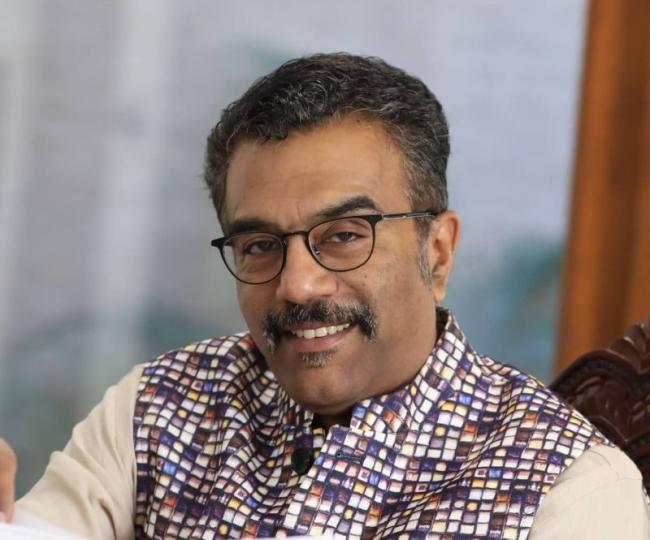
This budget is about building capacity, not chasing short-term consumption. It focuses on aligning talent with industry, strengthening advanced manufacturing, and reducing friction for technology-led services. The direction is clear: build depth, improve execution and let productivity compound over time.
The education focus:
The most important shift is that education is being treated as an economic engine rather than a standalone social spend. By linking universities to industrial corridors and explicitly connecting education to employment and enterprise, the budget recognises that skills, research, and jobs must move together.
Manufacturing:
The emphasis on electronics, semiconductors, rare earths, chemicals, and aerospace shows a clear intent to move manufacturing up the value chain. This is less about incentives in isolation and more about building ecosystems that support strategic autonomy and long-term competitiveness.
MSMEs:
The strengthening of receivables financing and platforms like TReDS addresses a real pain point—working capital. Improving cash-flow reliability for MSMEs is one of the most effective ways to boost manufacturing output and job creation without increasing fiscal stress.
Impact the IT services sector
The big positive for IT services is predictability. Simplified transfer pricing norms, higher safe-harbour thresholds, and faster dispute resolution reduce uncertainty. This matters as the sector transitions from cost-arbitrage to higher-value, AI-enabled services.
Emerging technologies like AI:
While it doesn’t over-promise, the budget clearly acknowledges AI and advanced technologies as productivity multipliers—both in governance and in industry. The real opportunity will be in how education, skilling, and digital infrastructure are executed around this intent.
Missing or underplayed:
The intent is strong, but execution will be the real test. Success will depend on how quickly institutions translate policy into outcomes—placements, factory output, research commercialization—not just allocations and announcements.”
Overall verdict:
This is a structurally sound, reform-oriented budget. It may not be flashy, but it strengthens the foundations of growth. If implemented well, it positions India for sustainable, technology-driven expansion rather than cyclical spurts.
- World Music Day 2026 Concert Writes a New Chapter in Kolkata's Cultural Soul
- Big boost for UPI: India’s digital payment system expands to Cambodia
- India at Cannes 2026: Glitter on the Croisette, But Where Is the Cinema?
- Sona College announces admissions to BTech in Computer Science, IT, AI-ML & Data Science
- NEET-UG to shift to Computer-Based test mode from 2027, says Dharmendra Pradhan; experts welcome move
- Sona College of Technology launches ‘Sona ChipIN Centre’ with latest semiconductor EDA tools
- Parampara founder Debabrata Sen brings Ayurveda to Gen Z with interactive session at Kolkata school
- Sona Institutions to open a College of Nursing at Salem
- Vee Technologies’ engineering division delivers 3,000th fire truck design for the US
- Jagannath comes to Kolkata: Up to 10 lakh devotees expected at Vishwashanti Mahayagya from April 17



Tata Group-owned Air India and Booking.com, a digital travel platform, have announced a strategic partnership to deliver a more seamless and rewarding travel booking experience.

IndiGo has introduced 'Cabs with IndiGo', a new airport transfer service that allows travellers to book rides to and from airports across Indian cities through the airline's platforms.
Tata Group-owned carrier Air India has announced the introduction of its new ‘Basic’ fare family, further strengthening its commitment to empowering customers with greater choice and control over how they travel and what they pay for.