
20 Oct 2016, 07:06 am
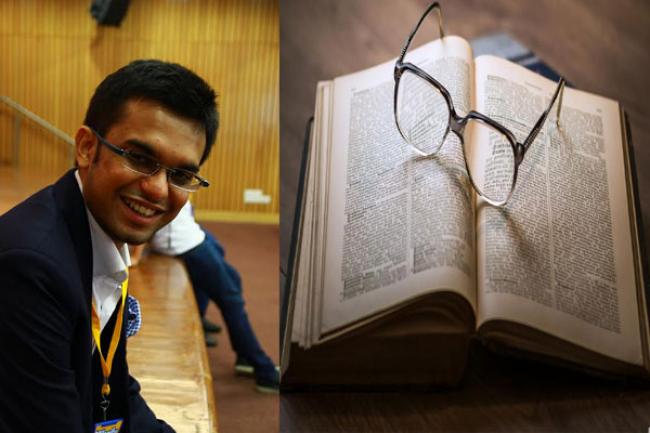
When people ask me the number one thing students can do to prepare for the future, specifically the college application process, the standardised testing cycle, even just the anxieties of potentially studying abroad in a new school system, they are inevitably disappointed by my answer. It’s not because I don’t give them one, or that the answer comes in a dollar amount that is too high for the average person to pay, it’s because the best thing they can be doing is also, for many, the hardest. They whine, they cajole, they try to justify why I’m not correct in my advice, but I stick by it, and I would give the same advice to anyone, no matter who they were. I don’t care how good or bad your grades are, how many internships you’ve done or recommendations you have from teachers, coaches and bosses.
The number one thing you can do is read. You need to be reading more. You just do. There is no shortcut, no trick, and no way to get around it.
Students need to read a lot more than most of them currently do, and Indian students need to be reading more than they can potentially imagine. For American students, reading is a big part of the curriculum in their schools, are it is also deeper encoded into the cultural zeitgeist in many places. The availability of books through public library systems and downloads of digital copies on devices means that everyone has the potential to be an active reader, although of course not everyone is, and studies have shown that American high school students read less now than their pre-Instagram counterparts. Still, the demands of school system across the United States in both public and private institutions push students to read between 6 and 10 books a year, at least, in English classes alone.
Additionally, the fact that English, History and Humanities course are mandatory for students for all four years of high school is an attempt to ensure that students are exposed to reading in a consistent way. But in India, between the tracked education system, the linguistic differences from region to region and often household to household, and the lack of public lending libraries, reading has somehow taken a backseat to the average Indian student’s understanding of how to self-improve. When I first arrived in India, I was amazed by how comfortable people were stating calmly “they don’t read”. On a questionnaire one student filed out, their response to “what is your favorite book?” was “I don’t read enough to have a favorite”. Day after I day I hear about students who “don’t have time to read”, or those who talk about their exhausting school curriculum which required them to read two whole books over the course of the school year. Yet when students struggle with the SAT, with writing their college essays, with preparing for interviews and expressing themselves on paper and to admissions officers, they are confused and don’t make the connection between their lack of preparation through reading and their lack of skills.
.jpg) Reading provides students with strong vocabulary building opportunities, an understanding of grammatical and narrative structure, and educates the reader about the world. It opens up horizons, exposes students to different viewpoints and opinions, and challenges them to think beyond themselves. These are life skills, and they wont just be ones students need in order to apply to colleges abroad, but also in order to do well at those colleges. There are very few programs in the United States that don’t require at least some humanities courses, and with the expectation of a limited number of disciplines, students will be expected to read and write in strong articulate analytical way in almost every field. The best way to prepare for that is to read, and keep reading. If you don’t like fiction, read non-fiction. If you don’t like historical novels, read contemporary literature.
Reading provides students with strong vocabulary building opportunities, an understanding of grammatical and narrative structure, and educates the reader about the world. It opens up horizons, exposes students to different viewpoints and opinions, and challenges them to think beyond themselves. These are life skills, and they wont just be ones students need in order to apply to colleges abroad, but also in order to do well at those colleges. There are very few programs in the United States that don’t require at least some humanities courses, and with the expectation of a limited number of disciplines, students will be expected to read and write in strong articulate analytical way in almost every field. The best way to prepare for that is to read, and keep reading. If you don’t like fiction, read non-fiction. If you don’t like historical novels, read contemporary literature.
If you are bored by prose, read plays or poetry. Check out graphic novels, source film scripts online, start with newspaper articles and increase your reading daily and weekly so that you strengthen your attention span and abilities, your vocabulary and your literary knowledge. There are a lot of things you can do to prepare for college applications, but the number one thing I consistently recommend is to read. So if you are thinking about what to do with your summer vacation, or how you can start focusing on the future, read. If you want your child to be preparing for college, hand them a book. Better yet, read with them. Get over your disappointment that there is no easy answer, and take the hard road. It’s worth, in the end.
(Author Rohan Ganeriwala, is the Co founder, Collegify, a college consulting firm for study abroad)
Catch him at www.collegify.com
Book image: http://wallpaperswide.c
- Sundeep Bhutoria brings Bengal’s Mahalaya to the nation in Hindi – Mahishasur Mardini ki Gatha
- VeeCycle Works Signs MoU with AP Govt for Rs 150 Cr Recycling Project in Visakhapatnam
- Kolkata culturist Sundeep Bhutoria inaugurates India National Stand at Frankfurt Book Fair 2026
- Where governments stop, institutions begin: Culture Minister Shekhawat salutes Prabha Khaitan Foundation
- National Award-winning ‘Ramnami’ puts spotlight on community behind Chaltabagan’s ‘Nishan’ theme
- Thiagarajar Polytechnic College receives Education Excellence Award for the fifth time
- Sona College of Technology's 25th graduation day: 1,325 students receive BE, BTech, ME, MCA, MBA and PhD degrees
- ‘We are the worst storytellers’: Suhel Seth on India’s failure to market itself at 'Kitaab' book launch
- Sona College of Technology welcomes 2,400 freshers to UG, PG programmes
- ‘Children shouldn’t carry the burden’: Social activist Sundeep Bhutoria urges Centre to enforce 10% school bag rule


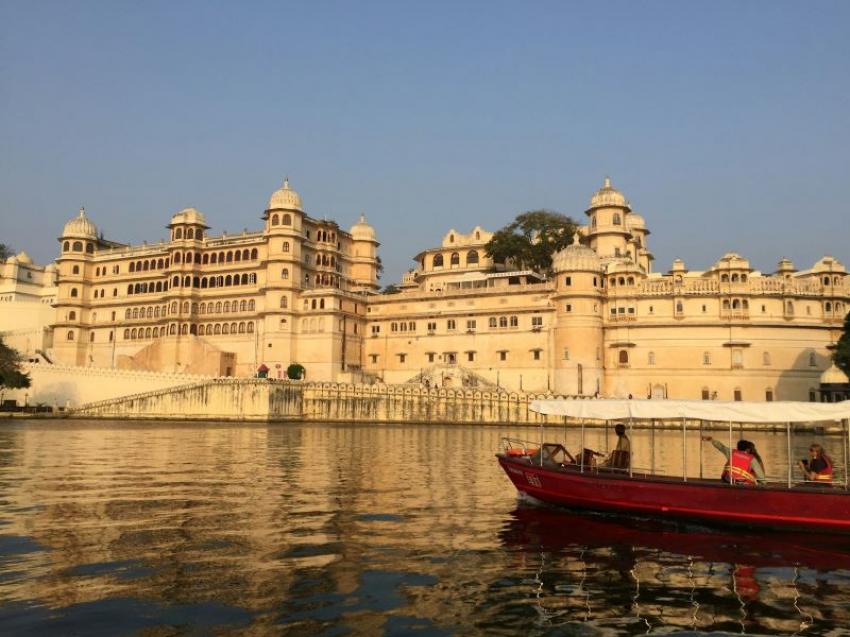
IndiGo will introduce daily non-stop flights to Udaipur from Noida International Airport and Navi Mumbai International Airport, starting October 25 and November 15, 2026 respectively.

Etihad Airways and Nigerian carrier Ibom Air have signed an interline agreement that will allow passengers travelling with Etihad to connect beyond Lagos and Accra to five cities in Nigeria on a single ticket.

Tata Group-owned Air India on Monday announced that guests flying during Navratri will be served specially curated festive meals onboard its flights and at its lounges in Delhi and Mumbai.