
25 Oct 2016, 05:57 am
Varied, Broad-focused Curriculum in the US
In the United States, the liberal arts philosophy infuses even specialized programs, and the concept of interdisciplinary learning means you can combine your love of religious studies and sociology, or your passion for music and math, to sculpt an education that serves all of your interests and expands your mind in multiple directions.
Even when you know your primary course of study going in, the core system most schools employ can mean you are required to do a certain number of courses in multiple varied subjects, ensuring that you have to diversify your education, even if you didn’t plan to do so initially.
The focus on college community is also a huge boon for many international students who find the support and comfort of the American college system to be a huge aid in their educational process.
Singular focus, Shorter course in the UK
In the United Kingdom, the system has the advantage of being really familiar because of the similarities between the British and Indian school systems.
The programs are shorter for the most part, and can be less expensive than programs in the United States as well.
The programs don’t have the kind of across-discipline requirements of colleges in the United States, which can be great if you are really set on one course of study and don’t want to jump through the hoops of requirements in exterior subjects.
Getting through college in only three years can really jumpstart your future, and the practical skills you gain through these specific focused programs can benefit you for years to come.
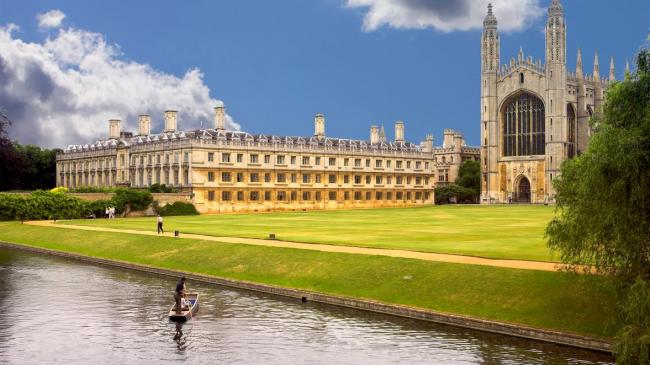
.jpg) Schools like Oxford and Cambridge, with their four-year programs and globally renowned reputations, can give you an education second to none, and while they are difficult to get into, if your current high school is run on a British system and includes A-level testing, you shouldn’t rule them out.
Schools like Oxford and Cambridge, with their four-year programs and globally renowned reputations, can give you an education second to none, and while they are difficult to get into, if your current high school is run on a British system and includes A-level testing, you shouldn’t rule them out.
Here's a list of popular countries for Indian Undergrads with pros and cons
USA
USA is by far the most popular destination for Indian undergrads, for the following reasons:
Pros:
Large number of Colleges (Over 2000 Institutes), including the famous Ivy League Universities
Large amount of financial aid and/or scholarships
Affordability of some community colleges and smaller state-sponsored colleges
Ease of travel (Most connected country on earth)
An American degree is accepted almost all over the world
It has a great job market. Placements post UG is high.
Liberal Arts curriculum is widespread
Cons:
Some programs (eg. Medicine and Law) are very competitive, and few, if any, International students get in.
If you don’t get scholarship, cost of education is very high in general.
UK
The next most popular country for Indian students is the UK, which has the following attributes:
Pros:
Degrees accepted worldwide
Home of the famous Oxbridge (Oxford and Cambridge) colleges
Cons:
Costs are very high, especially at the premier institutes
Availability of scholarships is low, and there is no financial aid
Visa is restrictive, and the job prospects are bad.
There have been many cases of racism against Indians in particular.
Australia
Australia is quite popular in the undergraduate market, narrowly beating out Singapore
Pros:
Relatively low cost of tuition and living
Favourable job market
Not very competitive
Cons:
Many violent hate crimes have been recorded against Indians.
There is no Financial aid at all for international applicants
.jpg) Journey to and from Australia is difficult and costly
Journey to and from Australia is difficult and costly
Singapore
Singapore is wildly popular among Indian students who are attracted by the short distance and low fees of these institutes.
Pros:
Full tuition scholarships are available for International students
Very close to India, thus airfare is low
Very supportive job market
New venture of Yale-NUS has added the liberal arts dynamic as well
Cons:
Tuition bond forces the student to work in Singapore for up to 2 years
Three institutes are most popular (SMU, NTU, NUS) and thus the competition is very high.
A lot of emphasis is placed on JEE/NTSE scores
Canada
Canada is a stable choice for Undergrads looking for quality education in the Americas, without the price tag
Pros:
Lower fees as compared to USA, but with almost all the facilities
Relatively new to the international UG market, in that they are aggressively promoting international student enrolment
Very highly ranked colleges with internationally recognized degrees
Cons:
Cost of living is high
Really inclement weather.
·
.jpg) Europe
Europe
A very popular choice for the following reasons
Pros:
No tuition fees at all – only fees are for student service and housing
Very rigorous courses with internationally acclaimed research facilities
ERASMUS-MUNDUS tie-up with Indian Govt makes it very easy to apply
Easy transition to PG available
Cons:
Housing is difficult to find and quite costly (though not comparable to tuition fees in other regions)
Some countries (Germany, Austria, France) are thought to be racist. These countries also often require a certification of Native language proficiency
Job Market is limited for UG, though it is very friendly (up to 6 months of work on the student visa itself)
The pass percentage is very low because of large number of student in-take because of low tuition
You need a PG degree to get a job.
Hong Kong
Relatively new, but fast picking up
Pros:
Aggressive marketing of international enrolment therefore less competitive
A few very high-offer scholarships are available
Cons:
Housing is not always guaranteed (to be checked with individual Uni)
STEM (Science, Technology, Engineering and Mathematics) subjects have better prospects (along the lines of HKUST)
- Sundeep Bhutoria brings Bengal’s Mahalaya to the nation in Hindi – Mahishasur Mardini ki Gatha
- VeeCycle Works Signs MoU with AP Govt for Rs 150 Cr Recycling Project in Visakhapatnam
- Kolkata culturist Sundeep Bhutoria inaugurates India National Stand at Frankfurt Book Fair 2026
- Where governments stop, institutions begin: Culture Minister Shekhawat salutes Prabha Khaitan Foundation
- National Award-winning ‘Ramnami’ puts spotlight on community behind Chaltabagan’s ‘Nishan’ theme
- Thiagarajar Polytechnic College receives Education Excellence Award for the fifth time
- Sona College of Technology's 25th graduation day: 1,325 students receive BE, BTech, ME, MCA, MBA and PhD degrees
- ‘We are the worst storytellers’: Suhel Seth on India’s failure to market itself at 'Kitaab' book launch
- Sona College of Technology welcomes 2,400 freshers to UG, PG programmes
- ‘Children shouldn’t carry the burden’: Social activist Sundeep Bhutoria urges Centre to enforce 10% school bag rule


IndiGo will introduce daily non-stop flights to Udaipur from Noida International Airport and Navi Mumbai International Airport, starting October 25 and November 15, 2026 respectively.

Etihad Airways and Nigerian carrier Ibom Air have signed an interline agreement that will allow passengers travelling with Etihad to connect beyond Lagos and Accra to five cities in Nigeria on a single ticket.

Tata Group-owned Air India on Monday announced that guests flying during Navratri will be served specially curated festive meals onboard its flights and at its lounges in Delhi and Mumbai.