
NITN | @notintownlive | 11 May 2026, 10:11 pm
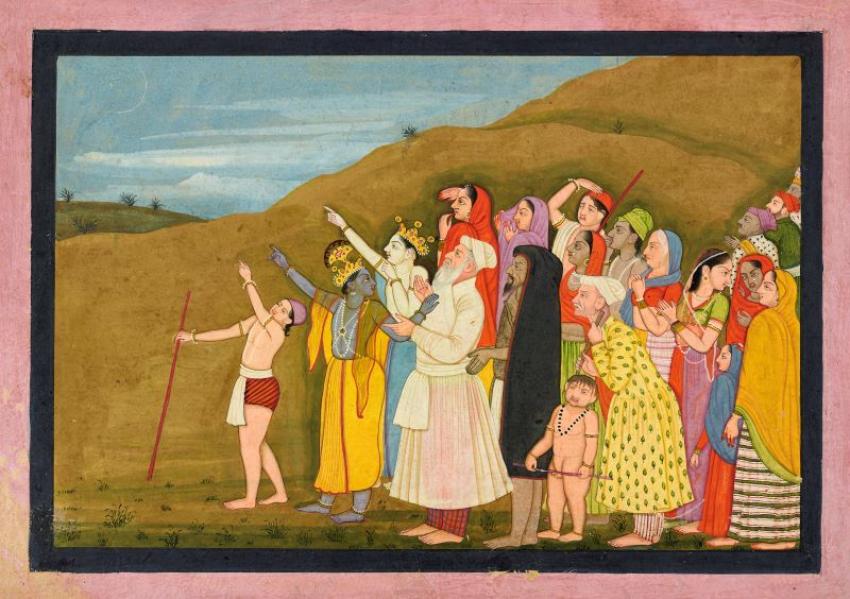
Krishna and his family admire a solar eclipse, perhaps a page from the “Kangra/Modi” Bhagavata Purana. Photo credit: First generation after Nainsukh / National Museum of Asian Art, Smithsonian Institution
The Smithsonian’s National Museum of Asian Art in Washington DC is set to spotlight a lesser-explored chapter of Indian art history with a new exhibition, “Of the Hills: Pahari Paintings from India’s Himalayan Kingdoms,” running from April 18 to July 26, 2026.
Bringing together celebrated masterpieces and works never displayed before, the exhibition features 48 paintings and coloured drawings that trace the artistic traditions of India’s Himalayan kingdoms.
It highlights how artists drew inspiration from both local traditions and ideas from other regions, creating paintings that are not only visually beautiful but also important to understanding the history of Indian art.
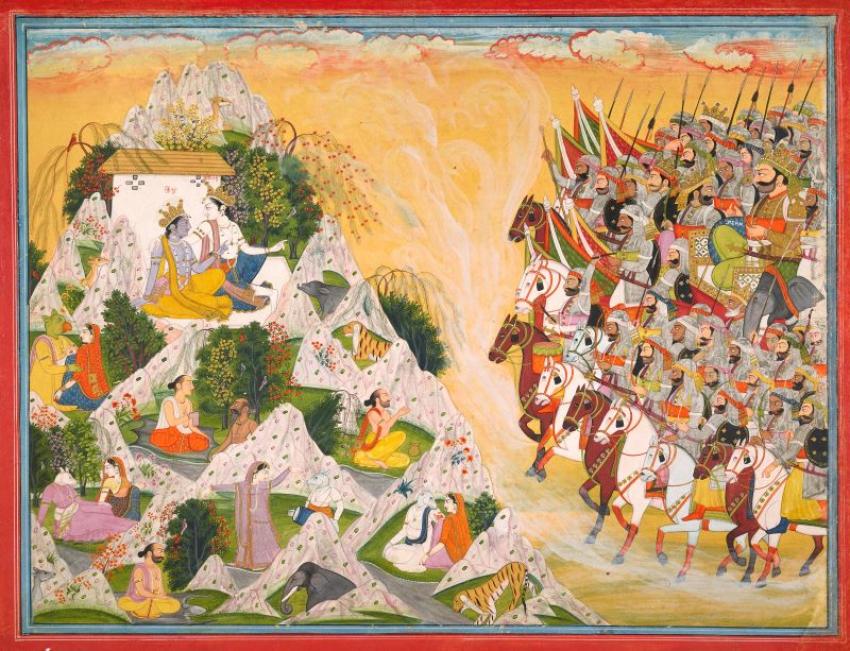 Jarasandha’s army advances toward Krishna and Balarama, folio from a Mahabharata. Photo credit: Purkhu / National Museum of Asian Art, Smithsonian Institution
Exploring the Artistic Legacy of the Himalayan Kingdoms
For centuries, a number of small Hindu kingdoms flourished in the Himalayan foothills of northern India. Around the 17th century, rulers in these kingdoms began commissioning paintings that stood apart for their craftsmanship and visual language. Some featured delicate shading, fine detailing and lifelike figures, while others embraced vivid colours, stylised forms and decorative brilliance.
“These paintings are swoon-worthy,” said Debra Diamond, the Elizabeth Moynihan Curator for South and Southeast Asian Art. “Created with opaque watercolours made from ground pigments, beetle wings and gold, it’s no surprise that they are among the most beloved of Indian paintings. Paradoxically, they also are among the least well understood.”
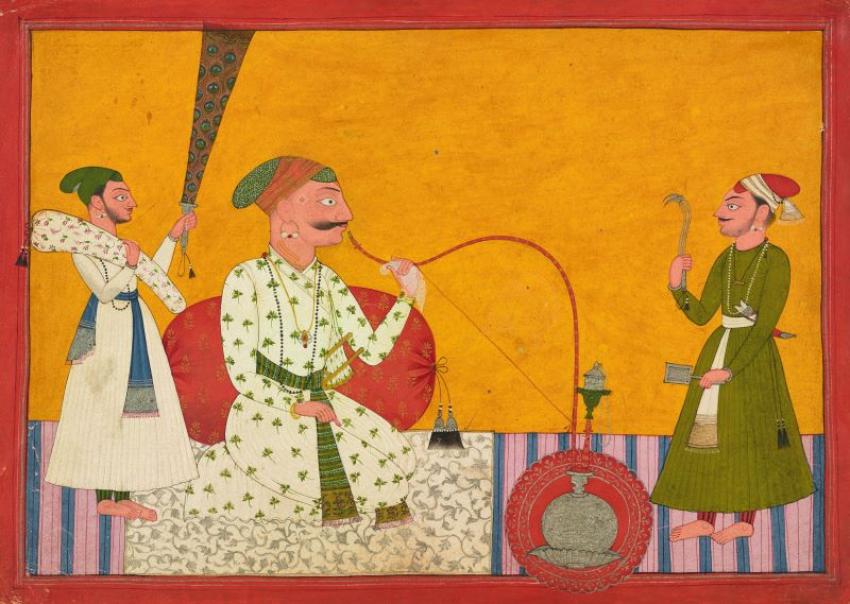 Raja Tedhi Singh of Mankot smoking a hookah. Photo credit: Master of the Court of Mankot /National Museum of Asian Art, Smithsonian Institution
The exhibition takes a fresh approach to understanding Pahari art by looking at how artistic collaboration shaped creativity between 1620 and 1830. Organised chronologically, it invites visitors to explore themes ranging from abstraction and devotion to romance and storytelling, while paying attention to details that can feel playful, subtle or deeply expressive. An introductory gallery also examines how painters contributed to shaping the Himalayas as a sacred cultural landscape.
Rare Works on Public Display
One of the major highlights of the exhibition is the inclusion of artworks that have never been publicly exhibited before. Many of these pieces come from acquisitions made by the museum between 2017 and 2018 from the collection of Ralph Benkaim and art historian Catherine Glynn Benkaim.
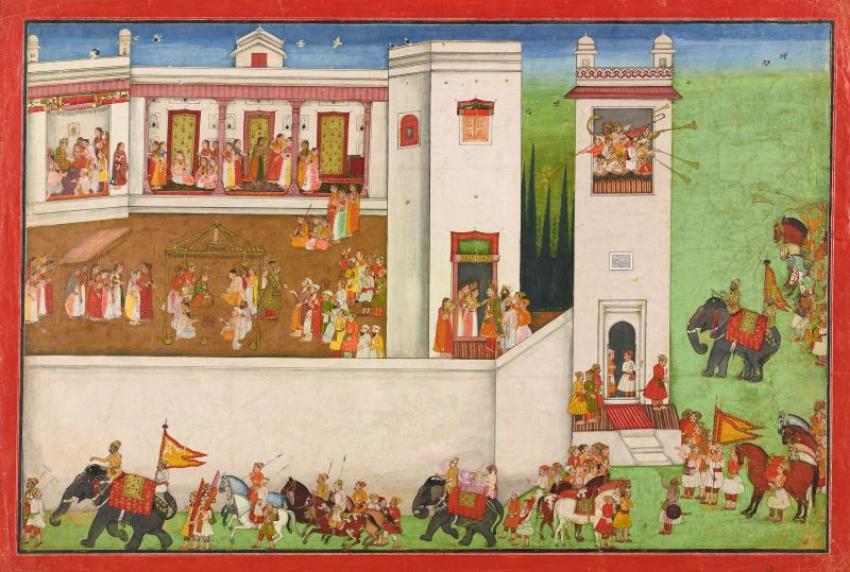 Wedding ceremony, folio from a Ramayana. Photo credit: Early Mandi Master / National Museum of Asian Art, Smithsonian Institution
The exhibition also places these works alongside the museum’s existing South Asian collections and loans from the Cleveland Museum of Art, offering a broader perspective on the evolution of Pahari painting traditions.
“We are thrilled to share these extraordinary paintings from the Benkaim collection with the public, some for the very first time,” said Chase F. Robinson, director of the National Museum of Asian Art. “Together with other works from our museum’s rich South Asian and Himalayan collections, they allow us to deepen our understanding of Indian culture and pursue new avenues of scholarship.”
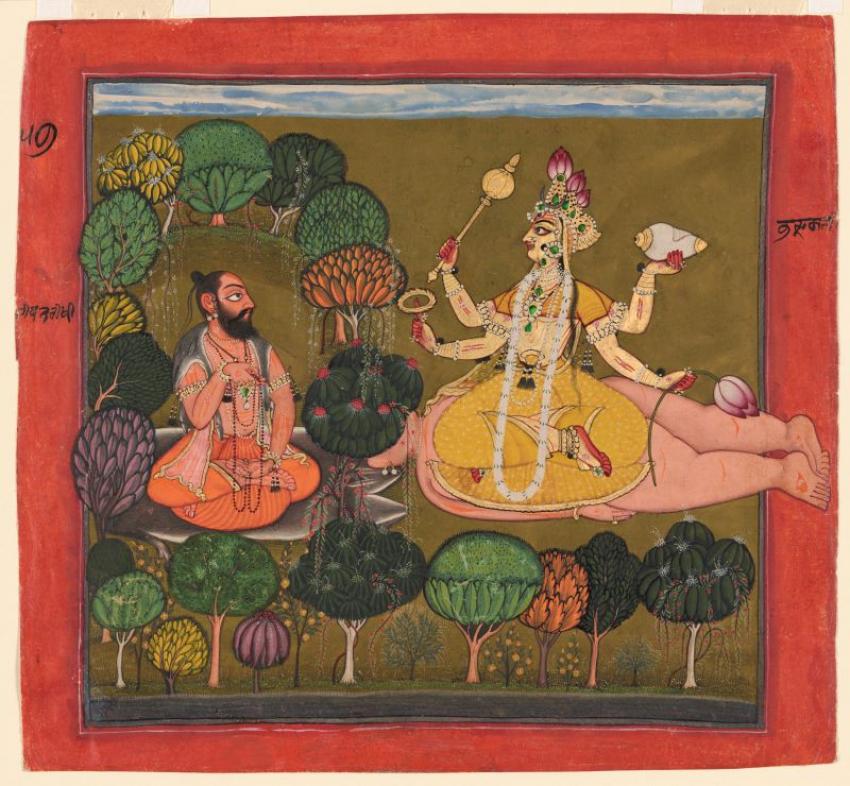 The Goddess worshipped by the sage Chyavana from a Tantric Devi series Photo credit: Kripal / National Museum of Asian Art, Smithsonian Institution
A Wider Celebration of Pahari Art
The exhibition will run along with two other major showcases dedicated to Pahari paintings in the United States: “Epic of the Northwest Himalayas: Pahari Paintings from the ‘Shangri’ Ramayana” at the Cleveland Museum of Art (April 19–August 9, 2026), and “Longing: Painting from the Pahari Kingdoms, 1680–1820” at the Cincinnati Museum of Art (February 6–June 7, 2026).
Curators from all three museums also worked alongside Catherine Glynn Benkaim, Vijay Sharma, and Sarang Sharma on Pahari Paintings: Art and Stories, a catalogue exploring works from the Benkaim Collection, offering further insight into the stories and artistic traditions behind these paintings.
- IndiGo passengers get a surprise at 30,000 feet: Here's what they were asked to do
- Riyadh Airport shut until October 17 after deadly Houthi attacks
- Navi Mumbai Airport’s aviation push: TajSATS facility ready to handle rising passenger demand
- Malaysia stays visa-free for Indians through 2026, but entry rules still apply
- Singapore introduces tougher penalties for disruptive behaviour on public transport
- Etihad Rail launches passenger service between Dubai and Abu Dhabi
- New Zealand moves most visitor visa applications to enhanced online system
- Indian passport rules changed: New validity, fees for children and adults explained
- Azerbaijan makes F1 travel easier for Indian fans with visa on arrival
- Kanchenjunga Tourism Festival to showcase North Bengal’s heritage, culture, and sporting events across 3 locations
IndiGo will introduce daily non-stop flights to Udaipur from Noida International Airport and Navi Mumbai International Airport, starting October 25 and November 15, 2026 respectively.

Etihad Airways and Nigerian carrier Ibom Air have signed an interline agreement that will allow passengers travelling with Etihad to connect beyond Lagos and Accra to five cities in Nigeria on a single ticket.

Tata Group-owned Air India on Monday announced that guests flying during Navratri will be served specially curated festive meals onboard its flights and at its lounges in Delhi and Mumbai.